Canons of Becoming

The soul still sings in the darkness telling of the beauty she found there; and daring us not to think that because she passed through such tortures of anguish, doubt, dread, and horror, as has been said, she ran any the more danger of being lost in the night. Nay, in the darkness did she, rather, find herself.

--St. John, Dark Night of the Soul


Friday, November 13, 2009

Center for Loss & Trauma


FOR IMMEDIATE RELEASE

November 16, 2009

CONTACT: Dr. Joanne Cacciatore: 602.574.1000 or Katherine Sandler: 480.861.7511

MISS Foundation Helps Traumatized Families in the Center for Loss and Trauma

Phoenix, Arizona (November 16, 2009) --- The MISS Foundation, through the Center for Loss and Trauma, is opening their doors to help families suffering traumatic loss. Traumatic experiences traverse culture, ethnicity, socioeconomic class, religion, and region. No one is exempt. In the midst of such psychological despair, there is a sense of grief that cannot be explained or described or captured or contained.

The Center for Loss and Trauma is one place where compassionate psychotherapy, counseling, and research can occur, as well as the bridging of vitally important supportive resources to help families in need. Located in North Phoenix, this unique center specializes in providing services to those affected by traumatic experiences, death, grief, and various types of loss. The Center for Loss and Trauma also serves military families, those coping with the death of a child, bereaved families, those affected by natural and mass disasters, victims of crime, families going through divorce or separation, and those suffering reproductive losses.

The mission of center is to C.A.R.E. for the most vulnerable members of society by providing highly specialized, expert counseling to those affected by traumatic loss; advocating with others so they may find hope, healing, and happiness in the aftermath of trauma; providing a place where compassionate research can occur; and educating individuals and society at large about the experiences of the bereaved. Dr. Joanne Cacciatore, LMSW and CEO, is a researcher and an expert family and individual therapist in the field of traumatic death and bereavement. James Jones, LMSW, is a Vietnam veteran and specialist in PTSD. Kathy Crowley, LCSW, has extensive experience working with individuals with chronic illness, abuse, and family stress.

The Center for Loss and Trauma also houses the MISS Foundation, a non-profit family bereavement organization, which offers free services to bereaved parents and siblings. Psychotherapy is provided on a sliding scale basis to those in need.

Dr. Cacciatore passionately explains, “Society’s only appropriate response is offer unconditional support and compassionate care so that one day, having been upheld and cared for, those who have suffered from such trauma can reach out their hand to help another. It is the only way to truly heal."

For more information or to schedule an appointment at The Center for Loss and Trauma, please call 623.979.1000 or visit us online at http://www.centerforlossandtrauma.com. For information on the MISS Foundation’s services, please visit http://www.missfoundation.org and the MISS Foundation’s PSA can be found at http://www.youtube.com/watch?v=qeHZuuohm-4.

###

Tuesday, November 10, 2009

I, Rigoberta Menchu


To be a light to others you will need a good dose of the spiritual life. Because as my mother used to say, if you are in a good place, then you can help others; but if you're not well, then go look for somebody who is in a good place who can help you.

- Rigoberta Menchu

Grief is a universal experience that transcends ethnicity, region, and language, weaving all human beings together in a common experience. Yet, I cannot begin to imagine the magnitude of grief experienced by an oppressive, immoral, or criminal government. Nor can I imagine life under the rule of an government that legitimizes the torture of children. Rape and murder. The theft of land, homes, subsistence, and dignity.

Rigoberta Menchu lived this grief daily at the hands of her oppressors. Yet, courageously, Menchu says of her experience, “This is how I came to consciousness.

Her book, “I, Rigoberta Menchu” confronts the brute ugliness of colonization without aestheticizing reality. Ordinary people would have been defeated by the relentless anguish. Ordinary people would have remained the passive audience of the Imperialist’s stage. But Menchu is anything but ordinary. She possesses the indomitable spirit of resistance, seemingly fueled by the very assaults intended to silence her people, the indigenous Mayans. Menchu is a moral guerilla in a grievously, immoral fight.

Menchu considers herself a deeply spiritual woman, called to action by her ancestors and motivated to fight in memory of those she loved and lost while trying to preserve the Mayan culture. She fights, not only for the lives of her people, but for the survival of a culture she loves. Witnessing Menchu’s transformation from paralyzing grief to fortitude awed me. Yet, Menchu’s resolve is congruent with the horror she experienced. The slaughter of her family is Menchu’s ammunition, and she remains determined to speak for her brothers and sisters, mothers and fathers, children and elders who were unjustly silenced. She is a true warrior.

While her story is reminiscent of a historic figure worthy of glory, each and every day I witness bereaved parents as heroes for their causes, using their voices to fight policy, to advocate, and to ensure social justice. These, too, are warrior heroes, though, perhaps unsung, who are in that "good place" to help others.

And this, I believe with all my heart, is how we come to consciousness.

Wednesday, October 28, 2009

So simple, so chimp?


This amazing photo shows a group of Chimpanzees at the Sanaga-Yong Chimpanzee Rescue Centre in eastern Cameroon lined up solemnly near a fence after one of their fellow chimps died and is taken away. Chimpanzees are normally very noisy creatures, but after the passing of one of their fellow chimps, an elderly female named Dorothy, the entire group rushed over to the fence and watched in silence as her body was buried. They sat there by the fence with their hands on each others shoulders as if mourning and consoling each other.


The photo was taken by Monica Szczupider, and the article from Inquisitr, a worker at the rescue center. She said Dorothy the chimp was well into her thirties when she died of heart failure after being ill.

Given the way some families are treated after the death of a loved one, I wonder if we have evolved or devolved... see my other blog/rant for the day below: So simple, so human. Perhaps, it should have been titled: So simple, so chimp?


*Thank you Kim

So simple, so human...


The power of compassion heals.
-Joanne Cacciatore

I've always known, intuitively- viscerally, that the compassionate presence of another human being could heal, not just psychologically, but also the somata (the body). But who knew that a smile or a hug just might curtail the common cold?

A new study conducted by the University of Wisconsin's School of Medicine and Public Health suggests that compassionate interaction with a physician can actually decrease the duration of rhinovirus. Yes, indeed. It's true. David Rakel, M.D., the principal investigator, notes that, "... if you perceive your doctor as empathetic (sic), that might influence your immune system and help you recover faster from the common cold...Out of everything that's been studied - zinc, vitamin C, anti-viral medications - nothing has worked better at fighting a cold than being kind to people."

He added, "...The individual needs to find the clinician with whom they believe they can form an ongoing therapeutic relationship. This also stresses the importance of relationship primary care, where each individual develops a collaboration and relationship with a clinician they trust over time."

Apparently, patients who felt that connection had higher levels of IL-8, a chemical that "summons" cells in the immune system to fight microbial infectors.

Wow. Compassion heals.

Now, if a person can experience expedited recovery from a cold through simple acts of kindness, imagine- just imagine- the powerful effects of truly connecting with another human being during a trauma. No, kindness won't assuage grief, or guilt, or shame, or any other residually painful emotion of human trauma. But imagine the dramatic potential of kindness- empathy- compassion on the long-term psychological well-being of a traumatized person. And taken a step further, imagine the long-term, potential effects to their physical health as well. If a compassionate other can increase a person's immune response, then what happens to a person in the absence of compassion, particularly during a serious or terminal illness- or during a traumatic experience?

I have never understood why compulsory courses on compassionate psychosocial care weren't part of the curriculum in medical schools. It seems so basic- so human- that is, being kind to another. Perhaps, someday soon, at the behest of insurance companies seeking to reduce healthcare costs, this type of training will be an integral part of medical training for both physicians and nurses- and pastoral care and social workers- and psychologists and psychiatrists. Perhaps, one day, the central pedagogy of body-mind-soul will be accepted into the orthodoxy of medicine. And perhaps, one day, as Albert Einstein said, "our humanity will surpass our technology."

Now that's nothing to sneeze at.

Thursday, October 15, 2009

Parasitism: Inflammatory rhetoric of the ignorant


But if thought corrupts language, language can also corrupt thought.

Political language. . . is designed to make lies sound truthful and murder respectable,
and to give an appearance of solidity to pure wind.

George Orwell


Recently, I've engaged in lively debate with a person who asserted that unborn babies - fetuses (Latin- foetus- meaning offspring) - were nothing more than parasitic organisms. I found this to be curiously inaccurate for an intellectual to wantonly assert as well as inflammatory and offensive.

Now,this person is a fellow academic. Not an ignorant person. Or so I thought.

I'm not a professor of parasitology or biology, so I decided to challenge her assertion.

So I went to an expert- Dr. H.D. Crofton- Parasitologist and author of the academic text Parasitology to define the criterion for a "parasite". According to Crofton, each of the following criteria must be met in order for an organism to be classified a parasite:

1. A parasitic relationship is an ecological relationship between two different organisms/species, one designated the parasite, the other the host.

2. The parasite is physiologically or metabolically dependent upon its host.

3. Heavily infected hosts will be killed by their parasites or harm will be done to the host.

4. The
reproductive potential of the parasite exceeds that of their hosts.

5. There is an
overdispersed frequency distribution of parasites within the host population. That is, the parasite population is not evenly distributed amongst the host population nor is it randomly distributed but clumped, so some hosts have a lot of parasites, most have very few.
(Crofton, H. D. Parasitology 63, 179–193 )

So, frankly, this person with whom I was debating was vagariously using imprecise terminology.

This type of ideological recklessness occurs in academics when scientists do not sufficiently explore terminology...their vernacular is often influenced by suppositions. And suppositions without sufficient evidence are often incited by the sociopolitical context wherein rhetoric is not challenged; rather, it is passively accepted by the majority as absolute in order to satiate an agenda.

In other words, unborn babies are referred to in certain arenas as "parasites" for political reasons. But it's an demagogic- and plain instigative- assertion.

But wait- there is so much more in defense of unborn babies.

And it's beautiful.

Seminal research on fetal microchimerism suggest that when a woman has a baby, she receives, in exchange for her sacrifice, a gift of cells that remain behind and protect her for the rest of her life.

That's because a baby's cells linger in the mom's body and -- like stem cells -- may help to repair damage when she gets sick. It's such an enticing idea that even the scientists who came up with the idea worry that it may be too beautiful to be true. Diana Bianchi, Chief of Genetics at the New England Medical Center in Boston did some of the pioneering research that discovered that moms carry fetal cells in their blood for years and years.

In fact, "fetal cells that persist in a mother's body long after the pregnancy- even decades later- may reduce her risk of breast cancer," according to researchers at the University of Washington and Fred Hutchinson Cancer Research Center. Their findings are published in the journal Cancer Research.

Robert Krulwich, an NPR journalist spoke to many scientists who agree: He says, "It's not a far-fetched idea. These cells may behave like those famous embryonic cells: They can turn themselves into any cell mom needs. If she's got a bad heart, they can be healthy heart cells. Bad lungs? No problem, they can be lung cells. Fetal cells may be the ultimate repairmen (or repairwomen)."

*******

Wait, wait. This is big people. The cells of every baby I've had- my four living children- and my beloved dead child- are living now, inside me. And they may help to save my life one day. I carry my children in my heart, perhaps, both mythically and literally. Chey's cells live. Inside me. Now that is enough to bring a tear or three to my eyes. As I told Sam on FB, it's gleefully ironic when mother's intuition synchronizes with science, and when the wisdom of the ancients eclipses the jaundice of modern thinking.

Every mother who has lost a child has within her cells that belonged to that son or daughter.

******

So, the relationship between a mother and her unborn baby is most accurately portrayed by the concept of mutualism or symbiosis. Each benefits the other in some very profound and perduring ways.

Thus, there are many scientific facts that should compel intelligent people to cease referring to unborn babies as parasites. Let's begin with the fact that it's indiscriminate and manipulative and ignorant, and reflects poorly on the cognitive capacity of the individual making such erroneous claims.

But, there are even better reasons to stop referring to unborn babies as parasites. It is hate language intended to devalue a woman's baby. And the devaluing of her baby is a devaluing of her self.

It's offensive to women- to mothers- to the babies- and to all those who really love them.


Tuesday, October 13, 2009

October 15th is Infant and Child Death Awareness Day

Reminded by beautiful Kara and KotaPress, I want to share a video produced by the MISS Foundation to recognize the children who died before their time, and the countless families left to mourn in their wake. In addition, two years ago, I accepted the Hon Kachina Award just two days before Oct 15th in honor of these children and the organization that has done so much to change the way our culture mourns the death of a child.


I know that many of you already know about the Hon Kachina Award last night. Thank you Kylie's mom, Dana Southworth, for the nomination. It was such a wonderful surprise to be offered this award.

As I accepted this prestigious award, I held all your children in my heart, and I ached. There was not a single moment last night when I was not filled with gratitude for this beautiful organization that has helped so many. They filled a really beautiful vignette which I will share with you when I can figure out how to attach it.

Thank you all for having a heart of grace and a soul of love.
Your child lives through your service to others.
Thank you, thank you, thank you!
This award belongs to all our children, the inspiration for our devotion to this cause.

I would like to share my acceptance speech.

By Joanne Cacciatore (c)
October 13, 2007
Scottsdale, Arizona
Hon Kachina acceptance speech

Everyone can be great, because anyone can live a life of service to others. You don't have to have a college degree to serve. You don't have to make your subject and verb agree to serve. You need only a heart full of grace. You need only a soul filled with love.

Martin Luther King Jr.
Good evening and thank you. This award is only mine in trust. On July 27, 1994, I was called to serve. On this tragic day, my precious child died, and I had no choice but to answer the call to duty. During a time of inconsolable grief more than13 years ago, I made a vow that if I survived I would help others. While the cost was too high, the beauty from that pain has proven incalculable. And now, I could not begin to imagine my life without the many lessons that I’ve learned, my greatest teacher a child who lived so briefly. She taught me mindfulness and compassion, and that helping even one person can change the world; she taught me that love is stronger than Death; and most importantly, she inspired me to lead by serving.

The most noble and effectual form of leadership is exemplified in service to others—by responding to the needs of others- bridging the chasm between helplessness and hope. Leaders act as stewards in the building of communities. It is truly the greatest, most principled life you can lead- a life devoted to humanity. In service to others, you will realize far more than that which you sacrifice - you will discover the power of a purposeful life.

I hope I have inspired service as I have been inspired by others to serve, including comrades and colleagues, the most extraordinary people I have ever known. I hope that I have modeled the maxim of kindness for my children, and someday my grandchildren. I hope the legacy of my sojourn will be one in which, my name forgotten, the philosophy of this social movement will endure across generations.

I am so honored and humbled to receive the Hon Kachina in memory of all the children who died too soon, and I am incredibly grateful, especially to my five children, my source of sustenance, my four who walk – Arman, Cameron, Stevie Jo, Joshua and my one who soars, Cheyenne.

Remember: A life in service to others is the cornerstone of quintessential greatness. We can, indeed, change the world in which we live. It takes only a heart full of grace and a soul full of love. Thank you so very much.

Thursday, October 1, 2009

Solitary and a Song

Loneliness and the feeling of being unheard is the most terrible poverty.
Mother Teresa

In the criminal justice world, solitary confinement is used as a punishment to avert future unwanted behaviors. It's effects are powerful. This type of draconian measure often drives prisoners to near madness. While some believe solitary confinement is more humane than harsh punitive interventions, I imagine the psychological flagellation and sociosensory deprivation to be nearly intolerable for most human beings.

I am reminded, however, that many bereaved- particularly those marginalized by stigmatic losses- are, in a sense, sentenced to a period of unsolicited solitary confinement. It's a period of incredible loneliness, even when surrounded by many others, particularly when one's loss goes unrecognized or unsanctioned by societal norms and values. Here, I am reminded of feminist Adrienne Rich's words:
Whatever is unnamed, undepicted in images, whatever is omitted from biography, censored in collections of letters, whatever is misnamed as something else, made difficult-to-come-by, whatever is buried in the memory by the collapse of meaning under an inadequate or lying language -- this will become, not merely unspoken, but unspeakable. And for the human being who is having the "unspeakable" experience, the sense of aloneness contributes to their invisibility, to their ushering into the shadows, to their solitude and pain.

This is a problem in the death studies field particularly in Western culture where the sense of the collective unification has been hijacked in order to stave off fears over feuding political ideologies (wherein the term "collective" is viewed as a pejorative by anti-socialists). But emotional collectivism and the rituals that are a natural accoutrement to those processes- truly help the individual in society. Unity in mourning or during crisis can unburden, sharing the bereavement experience and connecting humans to one another. Unity during times of joy and celebration can enrich, strengthen, and prolong the euphoria. I think of it as shared joy multiplying the joy and shared sorrow dividing the sorrow.

Thomas Verny, M.D. talks about one such collective lifespan ritual in his book Birth & Violence:
There is a tribe in East Africa in which the art of true intimacy (I would call it bonding) is fostered even before birth. In this tribe, the birth date of a child is not counted from the day of its physical birth nor even the day of conception, as in other village cultures. For this tribe the birth date comes the first time the child is a thought in its mother's mind. Aware of her intention to conceive a child with a particular father, the mother then goes off to sit alone under a tree. There she sits and listens until she can hear the song of the child that she hopes to conceive. Once she has heard it, she returns to her village and teaches it to the father so that they can sing it together as they make love, inviting the child to join them. After the child is conceived, she sings it to the baby in her womb. Then she teaches it to the old women and midwives of the village, so that throughout the labor and at the miraculous moment of birth itself, the child is greeted with its song. After the birth, all the villagers learn the song of their new member and sing it to the child when it falls or hurts itself. It is sung in times of triumph, or in rituals and initiations. The song becomes a part of the marriage ceremony when the child is grown, and at the end of life, his or her loved ones will gather around the deathbed and sing this song for the last time.

There is no solitary confinement there. No psychological violence or emotional torture. From the cradle to the grave, they are upheld, united by love, song, and death. No, there is no solitary confinement there.

Tuesday, September 29, 2009

Church's Last Passage

I was listening to NPR and heard a rerun of a story I'd heard previously. A familiar voice. I didn't know much about him, but I remembered he was a theologian facing his own early death to cancer.

Only the recycling of this story was to recognize the final curtain of Forrest Church. Knowing he had recently died, the retrospective nature of the interview felt different to me. And I was moved even more by his sagacious words and peaceful spirit:

GROSS: You know, you write in your book, you know, again, about how you don't believe in an interventionist God, and you say, once you start praying to God to cure your cancer or asking God why he didn't answer you prayers, the questions never stop. And then you refer to, like, a bishop who said his faith was shaken by the tsunami.

Rev. CHURCH: Yes.

GROSS: And then you say, you don't like it when people say about a tragedy or about, you know, an illness or death, well, God has his reasons. It's just part of God's plan.

Rev. CHURCH: This is God's plan.

GROSS: What do you object to about that? Why isn't that the...

Rev. CHURCH: Well, I can see how it can give comfort. But God doesn't throw a three-year-old child out of a third story window or allow a drunken driver to kill a family crossing the street. This is not part of God's plan. These are the accidents of life and death. And if God, for instance, is responsible for a tsunami, that obliterates the lives of a hundred thousand people and leaves their families in tatters, then God's a bastard.

I cannot believe in such a God. For me, God is the life force, that which is greater than all and yet present in each. But God is not micromanaging this world. That is a presumption that we are naturally drawn to because of our sense of centrality and self importance, but there are 1,500 stars for every living human being. And the God that I believe in is an absolute magnificent mystery....

More

GROSS: I want to get back to mortality. How much time would you say, in your typical day, you spend thinking about death?

Rev. CHURCH: At this point, Terry, I probably spend almost no time thinking about death. For the first time in my life, I am living completely in the present. I have, as I said about a terminal illness where you have time, in a sense, it allows you to sort of co-script your final act. To be able to write "Love and Death" was to be able to put a code on my life. I have been able to conclude my active life, as opposed to it just ending.

I am not yet at the point of being on my deathbed, so I am into sort of an in-between place. Each day is - I read. I chat with my friends who are ever more attentive. We take our friends for granted, as well. And when there is a short amount of time, they come out of the woodwork, old, old, old friends. And we spend lots of time together. And I am just in the present.

When the time comes, when I am closer to my deathbed or on it, I am certain that I'll begin probably even fearing, to some degree, the passage, but there is not fear in my mind now, and there is no preoccupation by death. It doesn't - I don't push my nose up against that dark pane in my window. I stand back and let the light shine on me.

I was inspired to tears as I listened. Religiosity and doctrine aside, his words resonated. His attitude challenged others to rethink life, love, and death - perhaps even the nature of God.

"Without even trying," he says "you've already won the only race that really matters. Unconsciously, yet omnipresent, you ran the gauntlet of stars and genomes to assume your full, nothing less than miraculous, place in the creation."

Being alive to love and hurt, to fail and recover, to prove your grit and show compassion, that is life's true secret. Life's abiding opportunity, bequeathed against all odds to each and every one of us, is much the same: it is to live, and also to die, for the multitude of brothers and sisters who beat the odds with us, who labored with our ancestors' hands and wept tears (of grief and joy) from our ancestors' eyes, connecting us as kin to God and each other, blessed together, always together, with the privilege of running from gate to flag in life's glorious race."

Reverend Forrest Church died on September 24, 2009.

Wednesday, September 23, 2009

Memorial in Lafayette, Louisiana


Our congratulations to Ms Joan Conway, RN and FIMR Director on the beautiful memorial that took place on Sept 16th, 2009 in honor of Infant Mortality Awareness Month.

This is a photo of the statue dedicated in honor of the precious children who died before their time.

Inscribed are the words:

"There are some forces more powerful than the physical world. The love of a parent does not end with Death. Suns rise and moons fall, but their love is forever over all." -- Joanne Cacciatore


I am honored and humbled.

Tuesday, September 22, 2009

Redefined, Refined, and ReFound


Anna Quindlen, a former journalist for the NY Times, lost her mother to cancer when she was a teen. A master of expression, she wrote of her experience with grief in a column entitled "Life after Death". This was published in May of 1994, two months prior to the big death that would forever change my own world.

She writes, "Grief remains of the few things that has the power to silence us."

Amongst other things, indeed, it silences us and others around us. The bereaved often anguish over a sense of abandonment by others. Not that silence is an inappropriate response; silence in the absence of presence results in loneliness. One can be silent and yet still say much.

She continues, "Maybe we do not speak of it because death will mark all of us, sooner or later."

Perhaps, in other words, the fear of death- death anxiety- causes others to withdraw, consciously or unconsciously, from the bereaved. Like an infantile game of hide-and-seek, if we cannot see Death, than Death cannot see us.

And my favorite passage, "Perhaps this is why this (grief) is the least explored passage: because it has no end. The world loves closure... loss is forever (and) two decades after the event there are those occasions when something in you cries out at their continued absence... we are defined by who we have lost."

For me and many other bereaved individuals, this redefining of the self is painful. For some, the pain gradually recedes- perhaps becomes more tolerable- and the newly established identity of the self becomes familiar, comfortable, and even, at times, a wonder. For me, Joanne Cacciatore redefined is sometimes that. And now, nearly 16 years into bereavement, I'd like to say that I've been redefined, refined, and refound by my Dead.

Ouch, but beautiful.


Wednesday, September 9, 2009

From the MISS Foundation

ANNOUNCING!

Calling all bereaved parents, grandparents, siblings, and friends! Two new MISS Foundation Fundraisers are about to be launched, and we invite you to participate and please send this email to others and post it so that others may also participate!

First up:

MISSing Ingredients: A Re-member-ing Cookbook

MISS is creating a hard cover re-member-ing cookbook, and we need your
recipes and memories to be a part of this publication. The first 200
recipes and memories entered will be published.

Deadline for all submissions Monday, October 5, 2009,
unless the 200 maximum is reached prior to that date.

There is NO FEE to submit your recipe and memory!!

Recipe Submission Instructions:

1. Visit http://www.fundcraft.com
2. Enter WEB ID: 13500-09VA
(a password is not required)
3. Click on "Short/cut Online"
4. Select (2) in drop down for # of parts in multi-part recipe
5. Select menu category from drop down
6. Enter Recipe Title
7. Enter Ingredients
8. Enter Recipe directions in Method section
9. Title your Memory in the Part 2 Subheading
10. Skip Ingredients section of Part 2
11. Enter your dedication in the second Method section

Frustrated, confused, it just doesn't make sense???? Email your recipe and
memory to: kathy.sandler@missfoundation.org

The cookbook will be available for purchase and delivery in December, 2009, just in
time for holiday gift giving.

You can PRE-ORDER your copies now! Cookbooks will be mailed directly to you!
Visit the MISS Store at: http://missfoundation.org/miss_shop/index.html
Cost of cookbook: $15/copy + $5 s/h
(100% proceeds to benefit MISS Foundation)

For additional information and downloadable PDF flyer here:
http://missfoundation.org/events/Events_2009CookbookFlyerWithInstructions.pdf

Second up:

heARTwork for the Holidays- Home Art Fundraiser

MISS, in partnership with http://www.KidsKreations.us, is hosting a
heARTwork Home Art Fundraising campaign. Your heART creations are
transferred onto items like notebooks, coffee mugs, aprons, ornaments,
pillows, tote bags, laptop stickers and more. MISS receives 35% of
proceeds.

You create art on an 8 1/2 x 11 sheet of paper, send heART and product order
form and check made out ot the MISS Foundation to either your support group
facilitator or to Kids Kreations by Friday, October 26, 2009. Your art will
beautifully transformed into a forever keepsake.

- Just is time for the holidays-

We invite both children and adults to explore one of the following themes:
Love
heART
Hope
What does your life look like now?
(new normal since the death of your child)
When I think of you...

Or... make a keepsake from your beloved child's footprint or handprint
(must be scanned and saved on disc as a graphic file like a jpg)

You can make artwork on your own or host a heArtwork night for your entire
MISS chapter.

All art and order forms must be submitted by Friday, October 23, 2009.

AND we are offering a challenge to each of our MISS chapters: The chapter
that sells the most heARTwork items will win credit towards scholarships to
the 2010 MISS Foundation Conference.

Have questions?? Call or email Kathy at 480-861-7511 or
Kathy.sandler@missfoundation.org

For additional information please download full information flyer here:
http://missfoundation.org/events/Events_2009MISSArtFundraiserFlyer.pdf

Friday, August 21, 2009

Mea Culpa


The bitterest tears shed over graves
are for words left unsaid and for deeds left undone.
~Harriet Beecher Stowe


Someone apologized to me for a hurtful act committed long ago. Though it was a delayed apology, the effect was profound in the present.

I found myself faced with a decision. I had to accept or reject their apology. To do the former would be a step toward grace and healing for this person and for me. To reject it, I sensed, would result in lingering angst and anger, not just affecting the nature of the relationship with that person but also, independently, affecting me and my experience in the world. So, with an equal mix of courage and trepidation, I accepted the apology and offered my forgiveness.

I was nonplussed by my reaction: I felt good. Relieved. Lighter. Almost- free.

And I knew- I felt it- I'd done the right thing.

I started thinking about apologies- accepting responsibility for hurting another- and recognized that we don't apologize enough to one another as humans who are in constant, varying degrees of relations with each other.

What is needed from those seeking forgiveness for a transgression?

Recognition of and remorse for the wrongdoing: It is crucial for the person who hurt the other to grasp the consequences for the person who was harmed.

Acknowledgement to the wounded and asking forgiveness: It sounds like this: "I've hurt you. I said something I should not have said. I was wrong. I am sorry."

Sincerity: This process must be sincere, not perfunctory. If it isn't coming from the heart, forgiveness will most certainly not follow.

Empathy: The experience of true empathy will help you understand the other person's possible reluctance to forgive wantonly, and thus, make the apology more meaningful. Take on that person's feelings; see the world through their eyes. Imagine if it was you...

Reassurance: Trusting relationships are a social commodity. The breaking of trust- either in a person's actions, feelings, or safety- is not easily rebuilt. Reassure the other person that you will work toward rebuilding trust, and offer a sincere promise that you will not repeat the offense.

The wondrous thing about the psychology of relationships is their complexity. They are complex because the human experience is multifaceted. Some transgressions will be easier to forgive than others. Some people will be easier to forgive than others. Still, forgiving is the process of giving to another; and there is much reward in giving. Far more than in taking.

I learned this lesson today and I gave what I've long-since needed to give. And it felt good.

Apologize to someone today. Leave no business unfinished.

(For) Give freely and be set free.


I am very sorry, Mom.
I am very sorry, Dad.
I am very sorry, Nanny.
I am very sorry, Pammy.
I am very sorry, AJ.
I am very sorry, Susan.
I am very sorry, David.
I am very sorry, Elisabeth.
I am very sorry, Jimmy.
I am very sorry to me.

And mostly, I am very, very, very sorry Chey. I am so very sorry.

I hope you find it in your hearts to forgive me.


Monday, July 27, 2009

God, an ant, and my daughter's death

There is something beautiful about a billion stars held steady by a God who knows what He is doing. They hang there, the stars, like notes on a page of music, free-form verse, silent mysteries swirling in the blue like jazz. And as I lay there, it occurred to me that God is up there somewhere. Of course, I had always known He was, but this time I felt it, I realized it, the way a person realizes they are hungry or thirsty. The knowledge of God seeped out of my brain and into my heart. 

-Donald Miller, Blue Like Jazz


God, an ant, and my daughter's death 15 years later...

What an odd title: What does God have to do with an ant have to do with Chey's death?

Let me explain...this weekend I found a little ant in my sink.

I don't know how the lone soldier got there, but he painstakingly- and without any success- kept trying to climb out of the sink only to slip to the bottom and have to start all over again. Exhausted, he continued to fight against his certain fate.  In an effort to help him without getting bitten, I put a small piece of tissue in the sink thinking he'd gratefully latch on and I could whisk him off to be reunited with his little ant friends in the yard.  

He wanted nothing to do with my help. I would put the tissue down and he'd move the other direction. I did not relent. Neither did he. In an attempt to escape, he even crawled down the dark, dank drain momentarily hoping I'd disappear by the time he returned.

Again, I tried to rescue him. 

Again, he avoided me.

So I tried to reason with him.

I said with consternation, "Now listen little ant," and continued in a frustrated tone, "I'm trying to save you here. Can I get some cooperation?"

Then I thought of what that must be like for an ant. To be stuck in an unfamiliar place, fighting to get out, fearful and confused.  And along comes a frighteningly incomprehensible (for an ant) giant who is causing even more psychic and physical pain. Despite my good intentions, for the ant it surely mustn't have felt like help at the time. 

I recently read the book Blue Like Jazz and Miller made a profound point that reverberated through my mind at that very moment.  He asserted that a human cannot really understand God (particularly during the midst of a tragedy) any more than an ant can understand a human.

Hmph. A moment of contextual perspicuity. 

That ant in my story could no more see the bigger picture of his own saving - despite my good intentions - than we, as humans can understand why there is so much pain in ours and others' lives. And in failing to trust, the ant was doomed.  He would never escape his present circumstances without trusting.  

Fifteen years ago today, Cheyenne Cacciatore died suddenly in what would be the most painful and epiphanic event of my life. It took me many years to understand that in losing her, I found me. The trauma of her death saved me in many ways. Yet, in the painful chaos of the first years after her death, I fought against the reality of grief.  I, like the ant, could not trust. So I climbed up and fell, over and over, down the porcelain walls of loss. No where easy to go but into the drain of the abyss.  

I could not see the entire picture or the potential outcomes. I could not begin to contemplate the fact that even amidst the suffering and terror, I was in the process of being saved.  

I miss you Chey. Every second of every minute of every hour of every day, I MISS you.  I don't understand the bigger picture of my own saving now, but one day I will. Maybe God will pick me up gently with his tissue and set me outside, in the yard, where I can find you again and you can tell me all about the saving of your momma. 

I love you. Happy 15th Birthday.


Tuesday, June 2, 2009

Human Touch


i know that touching was and still is and always will be the true revolution.
nikki giovanni

The largest organ in our body is skin. A piece of skin roughly the size of a half dollar contains greater than 5 million cells and sixty nerve endings, and it serves many functions from  sensory reception of heat and cold to protection from toxicity in the environment to thermo-regulating to  lubrication.  Touch is the most important, crucial of all human sensory experiences in both human and animal models.

Yet, I think touching has been largely demonized in the relationship between therapist and patient. During my own training, well-intending instructors cautioned about the use (misuse) of touch in therapy, emphasizing the need for professionalism through haptical boundaries.

The dangerous effects of touch deprival in society are clearly documented, from infant marasmus (refusal of a baby to eat leading to malnourishment believed to be caused from diminished skin-to-skin contact) to the severe consequences of tactile depravation in orphanages, leading even to death in the absence of any organic illness in children.

The human being requires minimal touch to survive, maximum touch to thrive. This applies for not only psychosocial (and spiritual) growth and development from the newborn phase throughout the lifespan; but also for a person's physiological well-being.  Touch deprivation can not only inhibit infant growth and bone development but it can even incite decreases in immune, digestive, respiratory, and cardiovascular functioning. Indigenous wisdom (Inuit use the parka, Native Americans use packs) has facilitated this practice for centuries through what has come to be known in the West as "wearing babies."

Still, in our world, there are warnings about the dangers of touching and being touched to the degree that we've interrupted our natural proclivities for touch and substituted rational, proximal distancing. This is especially problematic with young children, wherein the benefits of touching are profoundly beneficial, protective, and life-lasting; conversely, the effects of untouching are profoundly negative, damaging, and life-lasting.

I'm of the opinion that human touch can, not only grow, but also, heal the heart. Used with prudence and sincerity, I have seen touch connect strangers during crises. At times when words fail to express the depth of loss - where there are no words in any language that will comfort - touch, often, is enough to convey compassion and caring.  

The enfolding of one into another; the upholding of one by another...these revolutionary acts of love, simply, cannot be supplanted by any other means than human touch. 


Wednesday, April 29, 2009

The Path to Deliverance or Destruction


Transcendence is the only alternative to extinction. 
Vaclav Havel, July 4, 1994

During the course of a personal tragedy- one that is immeasurably traumatic, such as the death of a child- individuals have several choices, according to iconic thinkers such as Viktor Frankl and Sogyal Rinpoche. We can - when we are ready - search for and make meaning in our losses. And, as human beings having a human experience, there will be many, many losses. 

This sense of purposefulness is often aided through service to others.  Throughout history, many holy books, including the Bible, speak of serving others as a way toward union with the Creator. Many cultures embrace service as the cornerstone of a peaceful society. Spiritual and social leaders throughout time have recognized service as a fundamental pillar in reaching others (consider the most well-known "servers of people", Jesus Christ, Gandhi, Martin Luther King, Jr., and Mother Teresa). The need to restructure our selves is necessary at the micro level; and there is also, particularly now given the sociopolitical, global climate, a call toward service to others at the macro level (through ideas such as altruistic economics).

The alternate response is - well - to neither search for nor to find meaning. I see this in some bereaved individuals who, even years after their traumatic loss, meet a newly bereaved person and still feel the compulsion toward narcissism. They are unable to focus on the other rather than themselves. In other words, they are unable to transcend their own loss so it becomes difficult, if not impossible, for them to sit quietly and truly hear another's story of loss without imposing their own pain.  The entire process of grief becomes protracted and self-indulgent, and neither truth nor meaning nor growth nor purposefulness are easily discovered under these circumstances. 

Frankl asserts personal responsibility as a requisite to meaning, making each of us ultimately culpable for the psychological, emotional, and social outcomes following traumatic loss.  We have a choice. Our choices allow us to transcend. 

Or not.  

If we choose not, then we surely, in more ways than the apparent, face extinction.


Friday, April 17, 2009

Spotless Minds


Clementine: Joely? What if you stay this time? 

Joel: I walked out the door. There's no memory left. 

Clementine: Come back and make up a goodbye at least, 
let's pretend we had one... Goodbye, Joel. 

Joel: ...I love you... 

Clementine: ...Meet me in Montauk... 


Eternal Sunshine of the Spotless Mind was released in 2004, and I knew immediately I had to see this movie, if not because of the idiosyncratic storyline, then for the one-and-only quirky Carrey's performance.  I've never been much of a futurism genre connoisseur, but I loved this thought-experiment-of-a-movie. It was unlike any other I'd seen; an unusual type of humanistic sci-fi that provoked existential questions about love and loss, joy and suffering, life and death.  Yet, as neuroengineers and researchers uncover more about the mysteries of the brain, and more specifically memory storage, retrieval, and functioning, the possibility of selective erasure becomes more than some far-fetched fantasy. In fact, it may be that this option will become one of the great ethical concerns of 21st Century modern medicine. Some scientists certainly believe so.

Naturally, as I pondered those possibilities, I had to ask myself:  Would I erase the memory of my beloved child if it meant I would not have to feel the pain of losing her? (I hear an ol' Garth Brooks song lurking around the corner...).  It only took me seconds, perhaps nano, to emphatically answer no. I would not.  Even amidst the pain and angst and despair, the gifts of her presence in my life- the love- make it all worthwhile.  

But what about qualitatively (subjectively) less painful experiences, such as relationship losses? Would I erase those memories if I could?  What lessons would be lessened?  What experiences would I have missed due to fear of and anxiety over my own emotions?  Certainly, during acute moments of sadness or grief, I may have wished for the path of ease - a short cut, circumvention around the pain - if the option had arisen. Or would I, given what I know now- and understand- about the importance of suffering as a means to wisdom and fulfillment and meaning? And had I not known the pain, what would have become of the compassion and empathy for others which I have developed through my own suffering? 

Elie Wiesel said that 'whosoever survives the test, whatever it may be, must tell his story....that is his duty.'  Within that duty, implicitly, is the necessity to help others who also fall into the darkness of the human experience.  If no memory remained of our sufferings, how would we tell our story? Would our story really be our story at all?

What would you do? If you could engage in selective erasure, would you?


Thursday, March 12, 2009

A Pill or a Person...?

These days we are faced with many social problems, even those with ethical implications.  One such issue relates to potential collusion between authoritative entities and those who may benefit from the wielding of their power. Such examples include the below video demonstrating breach of trust in government officials or legislation such as eminent domain laws. These questionable and collusive relationships seem fraught with incontrovertible evidence of corruption.  Even seemingly good work by researchers positing important findings that will purportedly aid the depressed such as this study can be tainted with question. 

Wait. Pause. Look a little deeper. One my my friends and colleagues, Jeffrey Lacasse, published a letter in JAMA offering some dialectical discussion on this as well as another letter in BMJ after they'd discovered that the researcher failed to disclose funding provided by the maker of the drug. One consumer advocate writes in detail about the draconian sequel that ensued, directed toward Leo and Lacasse.

Ah, the quandary. I will resist the urge to amass evidence, often under-reported, regarding duplicitous relationships and the ethical implications of such travesties.  

Instead, I offer my thoughts on our proclivities toward the short-cut to healing.  In sum, there is no way to bypass suffering as a part of the human condition. Clinical depression that is endogenous is vastly different from that which rises from the exogenous, a particularly traumatic event or circumstance.  Yet, some fail to recognize this, and in so doing, they marginalize some of the most important healing potentialities of the human condition: people.   Whether it be in the psychotherapeutic relationship or generalized social support vis-a-vis friends and neighbors, you simply cannot compare the benefits of positive human relationships with psychopharmaceuticals.  Trying to do so, I would posit, is not only inherently dangerous to the individual who is depressed, but it also abdicates the responsibility that we all have to care for one another and to take the time to really be with each other through the ebb and flow of life.

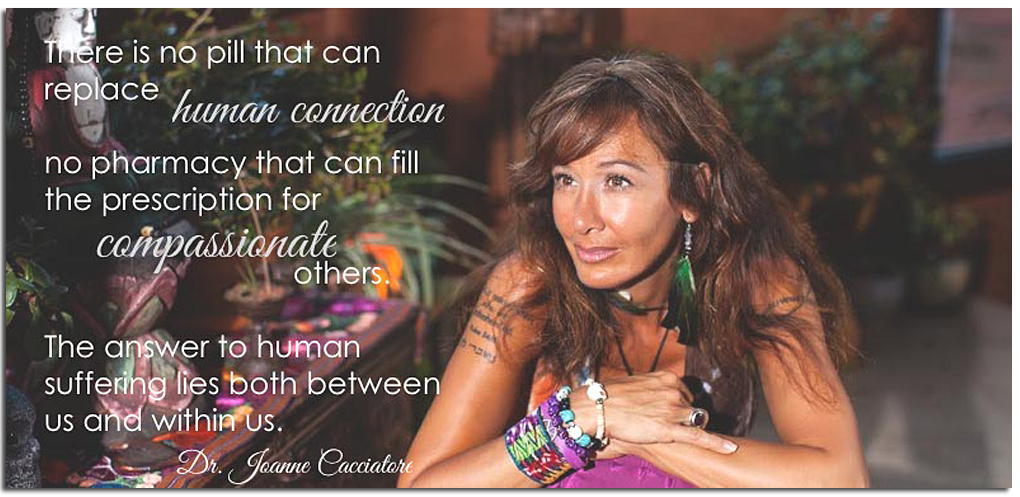
There simply is no pill that can act as a proxy. There is no pharmacy that can fill the visceral need for compassionate interactions with other humans. There is no panacean riposte. Instead, the answer to human suffering is both within us and between us. 


Wednesday, March 4, 2009

Warning: Not bereavement related but certainly traumatic

My allotted annual political rant...there is, indeed, a crisis in leviathan


Friday, February 27, 2009

Transcending our place in the world


What the sea loses
Always turns up again;
It's only a question of shores.
Erica Jong

I'm reading Erica Jong's How to Save Your Own Life (1977) and came to the coveted grocery list of existential freedom, the zeitgeist of her character Isadora Wing.  So how does someone save his or her own life? 

Renounce useless guilt and shame. Much easier said than done for those who had both served at the dinner table between the green beans and mashed potatoes. Yet, it's such an important part task in becoming. This dangerous dyad can be functional at times throughout our lives; yet, far too often we hold onto guilt and shame long past their functional phase, and they become our constituents. Active disavowal may help many shed these negative emotions, but I'm inclined toward facing them and challenging their right to move into my own heart. So, I write many eviction notices. 

Don't make a cult of suffering.  I write a great deal in my blog about how suffering is necessary for transcendence. And it is.  Yet, cults leave no room for discussion or debate or dissent. No other privileges, no critical thinking, no alternative views to the current state of being or belief. To transcend loss, a person must challenge, at some point, their view of the world, their view of their emotional state, their sense of self, and sometimes, their methods of coping with the human experience. It's not suffering that is the problem... it's the cult.

Live in the now, or at least the soon. This moment in time- this very second in which your eyes gaze upon this screen- is forever lost, irretrievable. Don't waste it either looking too far forward into the future or in the gazing past for too long. There are, indeed, things to await in the future, and things to reflect on from the past, and we can learn and grow from both. But our most important moment is the gift of the now. Don't allow the shadows of the past eclipse your present.

Always do that which you most fear.  Courage is an attribute that is developed painfully over time; it's professor? Disappointment and pain and practice.  With traumatic bereavement, facing the grief is the greatest of all acts of courage. Take it in small doses if you must. One day, you will be strong enough to carry its weight, and others can help.

Trust all joy.  The most beautiful thing about my own grief has been the abundant and unbridled joy I have discovered for the most simple things in life, the things that truly matter. Seek, find, and trust joy in your life. Grief does not require eternal, unmitigated suffering as an outpouring of devotion. Grief makes room for joy. In fact, it commands it in order to truly heal in such a way that grief becomes a welcomed friend.

Prepare to be 87 years old. Need I say more? What will you say about your life at 87? What regrets will you harbor? Who do you want by your side as you take your final breath? If you could describe your ideal life - the life you choose to live, even amidst the suffering - does your current life meet that description? What have you done with your 87 years, and how have you left your imprint on the world?  So much is answered in the exploring of these questions. Don't wait to answer them. Contemplate them now. It will be a painful contemplation, but it will help you to grow and live with such passion and fury that not a single moment in time will be missed.

And I'm really hoping that when I'm 87 or so, my time on earth completed, the sea will bring me to all that I've lost on a distant shore. Then, the saving of my life will have been worth the long and curious journey.


Thursday, February 5, 2009

Death Education Comes to Arizona State University! Finally!


After three long years of work and effort, the graduate program for the Certificate in Trauma and Bereavement is ready to accept its first cohort.

Why is this important? Because traumatic loss and grief can have devastating effects on both the individual and the community – physically, emotionally, mentally and spiritually. From a strictly economic standpoint, the price tag for unresolved grief amounts to billions of dollars each year in lost productivity, lower job performance, and destructive coping (Ayers, et al., 2004), and the "hidden annual cost of grief in the workplace" related to grief after a loved one's death is estimated at $37.4 billion. In the case of premature or sudden and traumatic death, grief-stricken families are often overwhelmed by the enormity of the death of a loved one, and with little or no support from those around them all too easily may fall into a downward spiral of destructive coping behaviors (Kissane, 2000). 

In sum, we hope to help educate our community to improve standards of care to the bereaved, increase understanding and support to the bereaved, and provide hope for the future.


If you know someone who may be interested, please pass along this link:

http://ssw.asu.edu/portal/academic/certificates/trauma-and-bereavement

Monday, February 2, 2009

Newsweek issue: A Vast and Sudden Sadness

The Clark family
Photo by Miyo Strong

Today, Newsweek magazine featured the MISS Foundation in an article about memento mori photographing with the group Now I Lay Me Down To Sleep.  They interviewed me about my work with traumatic child death as well as one of my research studies on perinatal ritualization. It's a beautifully powerful and sensitive piece. It is the February 9, 2009 issue in case you'd like to pick up a copy.

In addition to the article citing my research, I was able to appear on the syndicated Newsweek radio show with reporter Claudia Kalb on February 1, 2009 (toward the end of the show). While much work remains, we've come a very long was from our distant and evasive past.

I'd personally like to thank Newsweek reporter, Claudia Kalb, for her interest in this important story and the apparent compassion and dignity she offered the families, and the magazine itself for this often-overlooked human interest story.


Thursday, January 29, 2009

Monsters Inc.


I can remember being a young girl fraught with anxiety over monsters that lurked in my closet. Once the lights went out, my wildly vivid imagination transformed plaid dresses into horrid gremlins with gnashing teeth, and shadows incarnated on the walls as the room closed in around me.

All I needed to do in order to escape the wraith assailants was to close my eyes. But I could not. I felt compelled to look into the darkness as I awaited my dreaded fate.  Would the monster devour me, limb by limb? Would he carry me off to the netherworld?  What would become of me? 

The staring into the darkness did not end in childhood. Rather, this tendency has persisted throughout my life.  But with age, mostly, comes wisdom. I have mostly learned to face my Monsters; to confront those places that scare me. Mostly.  I still stare into the darkness, sometimes paralyzed with fear and anxiety.  

But I've learned that by confronting the Monster-of-the-Month, he's not so scary after all. In fact, when I turn on the light and invite him to sit on my bed and have a chat, he looks and feels very different than he did in the dark. He's softer, gentler, and he doesn't devour me. In fact, sometimes, he teaches me. Oh, it might be a painful process: turning on the light- taking those intrepid steps toward the switch- may be, at times, terrifying.  It seems, though, better in the end to become familiar with him rather than to remain unenlightened.  

The places that scare me the most are also the places of often unexplored territory, unmet potential.  I try to remember that a Warrior opens herself (or himself) to experiences of the unfamiliar. A true Warrior is willing to take the risks necessary to grow. It is in those places, where the Monsters have taken residence, where we can ultimately discover unbreakable truths. Sister Teresa of Avila calls these the "treasures that lie within". 

So, in the end, the Monsters that the Warriors befriend may hold the key to our contentment. How's that for antic (Pixar) irony?


Wednesday, January 14, 2009

Just....Peace

My youngest, Joshua, hiking Tonto National Forest with me in September, 2008


Peace is not something you can force on anything or anyone... much less upon one's own mind. It is like trying to quiet the ocean by pressing upon the waves. Sanity lies in somehow opening to the chaos, allowing anxiety, moving deeply into the tumult, diving into the waves, where underneath, within, peace simply is.

— Gerald May

I'm reading May's book "Wisdom of the Wilderness" (after already reading his version of Dark Night of the Soul, an iteration of St. John of the Cross), and I'm loving this book.  

I sought after the wilderness, Mother Nature, after Chey's death. I yearned to be close to the earth. I went on long hikes in the red rocks of Sedona; I walked along Christopher Creek in Payson; I sat atop big rocks, where many feet caressed the ground in search of truth and contemplation. Even to this day, a deep sense of spirituality calls to me from the wild, and I often find respite there.  I remember studying the Bible as a child and reading about how Jesus frequently retreated solitarily into the wilderness.  I understood why he did so. I have always felt closer to God- to the Universe- to Creation- to all that is and all that ever was when I was in communion with Mother Nature. May's writing feels much like Edward Abbey or Wendell Berry, two of my favorites.

But May does something special with nature: May uses the wilderness as a means to understand our inner selves as well. He says that the inner wilderness "is the untamed truth of who you really are."

Beautiful. Profound.  He talks about using the wilderness as a catalyst, both the literal and the mythical, to confront fears; an exhortation toward growth. He reminds us to stay awake and present in each moment, even through the suffering that life brings.  

Ultimately, he says, time within the wilderness brings us to a place within ourselves of gratitude and more importantly a place of peace. 

May died of terminal cancer in 2005, after completing this beautiful book.
 

Monday, January 12, 2009

Metamorphosis


Between grief and nothing, I will take grief.
—Faulkner, The Wild Palms

I remember in profoundly painful detail the reactions of others during the few months after Chey's death.

.............

"Are you still feeling so sad?"

"Why don't you try having another baby?"

"You need to trust in God's will."

"She wouldn't want you to be so sad."

"All things happen for a reason."

"At least it wasn't one of your older children."

"You should be over it by now."

..............

"Oh, really?" I thought to myself with outraged skepticism. "How could I possibly be over it? Over what precisely? The death of a child? And who set the time limits on my grief? And who says what losses are harder than others? In what book does it outline the commensurate nature of grief's reactions? And, oh, have you spoken to God lately about His will? How can I ever be over it?"

Those words, as if spoken into a deep, dark cave, reverberated through my mind, filling me with self-doubt, despair, and questioning.  Then, I had an epiphanic moment, and I wrote these words in my journal:

"Sometimes just being is the only way that I can be at all."

Sometimes, in other words, being in grief or being in despair, or being sad, or being desperate, or being encased in a womb of pain was the only way I could continue to exist. If that moment of being were somehow removed or rejected or repressed or relinquished, then I would most certainly have ceased to exist. 

I would have become my own emptiness. Nothing. Utter nothingness.

This prospect was the only thing more frightening to me than my grief.

So, instead, just being became my savior.  And now, almost 15 years later, I'm just becoming.


Friday, January 9, 2009

Weeping for Victoria


I manage about 200 to 250 emails a day, many of which are from grieving families around the world. The resonance of their stories coalesces during many times of my life, their valencies a buoy during my own times of existential crisis. 

So I weep. I weep often doing the work that I do. This morning was no exception:

Dear Dr. Cacciatore,

My name is Natalie Anderson. I am writing to express my deepest gratitude for the work that you do on behalf of stillborn children, and their families. In 1996, my first child was stillborn. My life was forever changed.

Yesterday, I wrote about and linked to your foundation on my
blog. I had many people commenting that I should pass along, to you, what I wrote. I have pasted it below. I am certain my writing is not politically correct enough for many people. I wish I could apologize, but really I am not sorry for the things I wrote.

Thank you again most sincerely for your tireless efforts... You(r work has) touched more lives than you can imagine.

Respectfully,
Natalie Anderson
Ellicott City, Maryland


Victoria is her daughter, her handsake; and she is Victoria's mother. No political agenda, no imposed labels, no assumptions, and no force on earth- not even Death- can change that.

Thank you, Natalie, for sharing Victoria's precious hands with us all.  

And this morning, I wept for Victoria.

Friday, December 26, 2008

Altering Fate


I often think that we are like the carp swimming 
contentedly in that pond. 
We live out our lives in our own pond, confident that our 
Universe consists of only the familiar and the visible. 
We smugly refuse to admit that parallel universes or dimensions 
can exist next to ours, 
just beyond our grasp. 

If our scientists invent concepts like forces, 
it is only because they cannot visualize 
the invisible vibrations that fill the empty space around us. 
Some scientists sneer at the mention of higher dimensions 
because they cannot be conveniently measured in the laboratory.

- Michio Kaku


Newton's idea of temporal absolutism, and our limited perceptual capacity, commit human beings to the notion of both unidirectional time and its strict linearity. Yet, quantum mechanics reveals a much more complex and relativistic view of time and space.  Klaus Riegel's work emphasizes the concept of time as dialectical, interrelated and says that events in our lives:

...lead to the formation of conflicts and resolutions... 
temporal markings, produced by the synchronization 
of these sequences and represent transitions in the 
sequences of qualitative changes...

thus, elucidating the relative nature of the events, the sequential measure used, and meaning and awareness within a person's sense of time and space. In other words, our development into full human beings is not necessarily measured or appraisable vis-à-vis the traditional ordinal or interval temporal increments.

Quantum physics, and more specifically string theory, are gradually refining and delineating our understanding of time continuity and discontinuity. And these new understandings, being explored by brilliant, iconoclastic quantum physicists like Michio Kaku, give rise to so many potentials beyond our current comprehension; including a restructuring of  our place in the Universe, time and events in which we play a role, and even the outer edges of transcendental possibilities such as time travel, parallel universes, and multiple dimensions.  

The most phenomenally mysterious, consequential forces in our Universe, I believe, are precisely those that cannot be measured within a flask or under a microscope or with a psychometric tool. There is simply no way to measure time, space, fractal dimensions and meaning, or even love within the four walls of science.

Thursday, December 18, 2008

The Architecture of Hope


I believe in rain, in odd miracles, 
and in the intelligence that allows terns and swallows 
to find their way across the earth.
-Paul Hawken

The essence of hope is something to which I've held for most of life. Hopefulness, as an emotional state of being and as a paradigm through which I view the world, is one of my core values. I hope, I believe, and I have faith most times, even when the forces of doubt and despair feel Herculean. At least, I try to hope- and for good cause.

There are empirical data mounting that explore hope as a core personality trait; as one of the most significant foundational underpinnings upon which a person's character is built. Peterson et al (2008) found that individuals who scored high on a tool measuring core hopefulness were more resilient. Resiliency is a pivotal attribute in helping humans to endure suffering.  That is, hope and resiliency interact; the effects of this interaction are profoundly important to psychological endurance and tolerance.

These are potently essential psychological resources to possess.

Hopefulness may be a more visceral character trait. And while it may bolster resiliency, I suspect, and some research supports this suspicion, that resiliency truly burgeons from endogenous and exogenous factors. In other words, the family system, the community, and the larger sociopolitical environment in which a person exists in the world can foster and facilitate or quash and extirpate resiliency.

Interestingly, research in animals (rats specifically) suggests that those faced with traumatic experiences, under the right circumstances, are more resilient- as a biological function- than those not exposed to such stimuli.  In comparing three groups, including a control, the group of rats exposed to trauma fared better than those not exposed to trauma. They were more hardy, and had a higher level of resiliency and functioning. The caveat: Those rats repeatedly exposed to the traumatic stimulus did not fare better. Seemingly the chronically unresolved rats- those who were "hopeless" for any relief- suffered the most out of all the groups.

I know rats are not humans, and there are significant ethical and comparability issues in such research. But even anecdotally, there appears to be strong support for the hypothesis that exposure to adversity- under the right circumstances- can help foster resiliency in such a way that we, as humans, can transcend; it's an opporunity to become believers in the rain; and in odd miracles; and in the notion that all things find their way home, to the heart.


Sunday, December 14, 2008

From the Stocking to Yann


From the stockings in Arizona....

To Yann in Cambodia 


Our family engages in many altruistic traditions throughout the year, including during the holidays.  We always buy a gift for a girl who is the same age as Chey should be that particular year. We volunteer and serve food to the hungry. My favorite, mostly because of the assigned anonymity, is the Kindness Project (tm), where I will often feel the most gratitude for having known my daughter in my own quiet way.

I began thinking about the holiday tradition of stockings. My children made their own stockings back in 1996, shortly after Joshua's birth. It was a special year for our family as we made room for our new baby.  

So I decided that this year I wanted to do something meaningful with our stockings. After all, a person could spend $50 or more on gadgets and gizmos that wander into the netherworld of lost children's toys  within moments after their emergence. I thought: Why not do something in my children's names that would be an enduring gift for someone else.

Enter Kiva.  Kiva is a fantastic organization of mostly volunteers who provide micro-loans to small business owners in many poverty-stricken nations.  It is a paradigm based on empowerment and enrichment not disempowerment and enslavement. 

So with my children's stocking fund, we were able to help Yann Voeun, 22, a young mother in Cambodia with two children to purchase cows for their breeding business; and Romel Paulo, a father of three, in the Phillipines who needed $325.00 so he could plant his next crop of rice and corn; and Edith Agho, mother of five, who requested a loan of $1200.00 to help her start her second-hand clothing business in Africa.

The children's "stockings" helped eight people they will never meet or know achieve their dreams and become more independent and self-reliant.

So, this holiday when they reach into their stockings, they won't find chocolate covered gold coins, or wind up toy cars, or dice games. Not even coal.  This year, they'll open an envelope and meet someone whose lives they were able to touch across the oceans, beyond language, and traversing culture. I think it may well be the best gift of all this year, and a new tradition I hope they will continue with their own children.

Wednesday, December 10, 2008

The Extinction of Tolerance


If you see a spark, you will find it in the ashes.
-Elie Wiesel

A friend of mine called me today to ask my advice. She's enduring the ending of a long relationship, feeling destitute, lonely, and broken.  She asked, "Should I go on some meds to make me feel better?"

"Feel better?" I said. "Why should you feel better? Something really important is happening here in your life. It's a major change and what you're likely to feel is grief."

She blurted, "I don't want to feel grief. I don't want to be sad!"

Well, of course we don't want to feel sad. But...really...isn't there an appropriate time for sadness?  Have we, as a culture- as a people, lost our tolerance for feeling? Is there some cosmic treaty guaranteeing that neither you nor I nor our neighbor nor best friend will get through life absent suffering? 

Still, so many people seem to want a drive-thru cure, 30-second gorilla glue, for a broken heart- for normal feelings like sadness or grief or despair.  Many have not had much practice in sorrow, loss, hunger, desire, or want. Affluence attenuates tolerance. Low emotional tolerance increases the risk of depression and other negative psychological outcomes.

And, what do we miss by our evasions, as Jaspers asks? What happens when we obviate emotional risk?  There is a sublime, and I would argue necessary, beauty and aptitude waiting to be discovered in the dark emotions.  Suffering offers opportunities for change, transformation, and transcendence. 

Is it painful? Of course. But since there is no way to eradicate all suffering from the world, perhaps, the most genuinely humane thing we can do for ourselves and for each other is to feel our suffering and that of others. And in so doing, search for the spark, the light, within the ashes.

It just might be the spark that saves another.  

In the end, the best I can offer my friend is to feel with her- to confront the suffering by her side, and to fearlessly accompany her on her journey into the dark emotions.  In the words of de Montaigne, "the man who fears suffering is already suffering what he fears."

Saturday, December 6, 2008

Tis the Satirical Season?

My 12- year- old launched a full-blown-food-protest this morning (after too long between grocery trips), threatening a revolt if we ate veggie burgers one more night. So I got into my baby blue Prius and drove to the grocery store, hurried and harried to return back to a final draft of a paper on deadline.

As I walked toward the entrance of Safeway, I passed a woman standing at her car with her hand on the hood. She was leaning over as if she was in pain. I glanced at first, and continued past her, taking a minute for circumspect to strike me. Then the pause. 

I turned around and thoughfully approached her. "Are you okay?" I asked? She replied, "I'm just having one of those days. I can't seem to get to my truck."  She was parked in the disabled spot.  

"May I help you?" I asked.  "Sure," she said smiling at me with apparent gratitude, and maybe some surprise.

She moved with painful deliberation as I gently took her arm and helped her into the truck.  A few seconds later, a young employee of Safeway approached to see if he could help.  He put her groceries into the back of the truck as I continued to help her into the vehicle.

She drove away grateful for the assistance.

I headed back toward the door of Safeway, about 40 feet from where this woman was struggling and walked past the holiday season staple: Salvation Army bell ringers. There were four of them posted at this single spot, one furiously text messaging, another talking on her cell phone; about five others posted another 20 feet away. 

Again I hurriedly walked past them, and then I suddenly stopped. I walked back outside and looked at them. They were watching the woman as she drove away. They had seen her struggle to get to her vehicle as she had to walk past them to get to her truck. And I was both stunned and entertained at the irony: They were there collecting money so that they could help others in need.  

Yet, right there, within their very view, was a person in need, someone they could have helped in this moment- not in some intangible way, but in a very authentic-in-the-moment-way. I felt like I was in a bad piece of satire: Saturday Night Live's caustic condemnation of human behavior comes to small town Arizona. 

Where have we gone wrong that we don't pay attention to one another any longer?  Why do some humans ignore their moral duty to help?  What compels some to take the initiative to help even while others do not, or even while others will inflict direct harm? *(Milgram's experiments, while unethical, taught us a great deal about human behavior and helping/harming...)

It's easy to drop a dollar in the hungry metal bucket. It's easy to send a check in the mail to some obscure group that helps people who you will never know or meet or see. And they are, indeed, worthy and necessary causes to which others should give. But, there are so many more important things than fiscal responsibility to one another. There is a responsibility of compassion; kindness; mindfulness of suffering; advocacy for social justice; and our pause in recognition for their worthiness of our time. Those are the things that money cannot buy. Those are the things you will not find in any red bucket.  And apparently, those are the things that are the most difficult to offer to another, if for no other reason than we mindlessly are unable to see the need as it arises. Those are also the most imposing tests of our own humanity.


Thursday, December 4, 2008

The Four Quartets: An excerpt


I said to my soul
Be still
And wait without hope
For it would be hope for the wrong thing;
Wait without love
For it would be love of the wrong thing;

There is yet faith,
but the faith
and love
and hope 
are all in waiting

Thus, wait without thought
For you are not ready for thought
And in the darkness there shall be light,
And in the stillness, dancing…
Pointing to the agony of birth and death.

T.S. Eliot

Tuesday, December 2, 2008

Death Education on the Horizon

One of my former interns and death studies students, Krista

I've been teaching a class on traumatic death and loss at Arizona State University for several years. When I first proposed the new course, the only death-related course on campus was one that had a gerontological focus. I actually took that course to experience it. The deaths of children weren't discussed. Even in a death course, this epidemiological microcosm remained the last taboo.

There were concerns that my course would not be well attended; that it would repel rather than attract students.  Yet, during the first offering of this class, we met and exceeded the cap of 30 students. Then, another ten enrolled. The first course of its kind would bring 47 students to the new death studies course.

Years later and registration remains the same. This Spring, I will meet between 45-50 students wanting - yearning - to learn.  We could have easily enrolled 60 or more students based on the demand, but the classroom will not accommodate that number.  In fact, I have a waiting list in my office now.

I have never experienced such enthusiasm for a topic as I  have for this course.  It's an academic course, indeed. We explore Worden and Rando and Kastenbaum and Kubler-Ross. We discuss evidence based practice relative to psychosocial care.  The course includes cultural competency, ritualization in the historical context, and both epidemiological trends and etiology.  Yet, the most meaningful part of the course includes some self-awareness exercises.  Very few students come to this course without having experience some profound loss. They come to share, to discover, to confront, and to heal. They often develop an increased understanding of their own experiences of loss that leads them to something profound. And these profundities invariably help these students become better counselors, social workers, nurses, doctors, or just human beings.  Death studies is more than a course about death. It's a course about life.

And many express to me, at the end of the semester, their gratitude, noting that the simple act of confronting death has, indeed, helped them to really live again.

And so it is. And so it is.

Monday, November 24, 2008

Peace and Forgiveness


Forgiveness is one of the most important first steps
to ending conflicts
within ourselves,
and within in our families,
and within our communities,
and between nations.

-- Robert Alan

1994 was a bad year around the world. While I was suffocating with my own grief following Chey's death in July of that year, unspeakable atrocities erupted in Rwanda, where the Tutsis were being butchered en masse by the Hutus.

Dread and despair amassed in a small African country where genocidal unrest would leave nearly one million Tutsis dead. Amongst those dead included all five children of a remarkable woman of Tutsi descent named Iphegenia Mukantabana.

During the uprising, a Hutu militia that included Mukantabana's neighbor, John Bizimana, armed themselves with clubs, hoes, and machetes and murdered all five of her children, her husband, and many others in her village. It was an inconceivably violent slaughter that would last for 100 days at the behest of the Rwandan government.

Years later, Mukantabana took a remarkable step toward forgiveness for her neighbor, Bizimana, the man who took the life of her entire family. And, after serving only seven years in jail for the murders, Bizimana went before the city council and asked Mukantabana for her forgiveness. She granted that forgiveness. And she transcended it.

In an effort to promote peace, Mukantabana, a master basket weaver, agreed to participate in Path to Peace, a cooperative effort that joins Hutus and Tutsis together to benefit Rwandan children and families. Mukantabana now weaves baskets in her village with Bizimana's wife. Together, they have helped to employ more than 2500 weavers, raising much-needed money and support for education, HIV/AIDS, and for healthcare. More than that, they have created a milieu in which reconciliation and forgiveness can flourish.

I am startled by human endowment. It feels nearly supernatural to me, this forgiveness for such a heinous crime against her family. I do not honestly know if I would have this within me. Mukantabana credits her faith; And while I do not understand, I dare not question. Rather, I only stand in awe.

And I am reminded that peace- true peace- will only be possible within and between people. Peace will not come from institutions. It would be an grave and improvident error to anthropomorphize: Governments do not have the capacity for compassion, or kindness, or love. Governments cannot offer peace, nor harmony, nor tolerance. Nor forgiveness. In fact, a brief review of history will demonstrate that governments have most often brought systemic angst and despair to its people through manipulation and coercion. Divisiveness. Slaughter. Impoverishment. Exploitation. Oppression. Fear. It is not this machine that will change the world. The machine cannot feel. Rather, it will be conscious, courageous, and intentional human beings who change this world in which we live for the better.

Only people - with the possibility for those insuperably human traits of compassion, kindness, and love- can create peace, and harmony, and tolerance. These are the consummate qualities of humanity, what it really means to be a person.

Only people can forgive.


Tuesday, November 18, 2008

Neolithic Love and Death

An artist's rendering of the likely burial position 4,600 years ago


Come out of the circle of time
And into the circle of love.

Rumi


Scientists have discovered a burial site in Germany that tenderly held the remains of a Neolithic family who died, apparently together, in a brutal attack about 4,600 years ago. DNA evidence gathered at the site suggests that the four were related: mother, father, and two children. They were carefully buried facing one another. " "Their unity in death suggests unity in life," the researchers asserted.

While the idea of core nuclear families during this period of human history may seem an unusual archeological discovery, family scientists, myself included, are not at all surprised by this finding. There is something timeless and pure about a parent's love for his or her offspring. Something that is able to withstand any force that rises up against it- even, or perhaps especially, Death.  

Thursday, November 6, 2008

Juxtaposing Joy with Thoughts of War (*Warning*)


Bella detesta matribus
Wars, the horror of mothers 

Horace


There is no government so worthy
as your son who fishes with you
in silence beside the forest pool.

There is no national glory so comely
as your daughter whose hands have learned a music
and go their own way
on the keys.

There is no national glory so comely
as my daughter who dances and sings
and is the brightness of my house.

There is no government so worthy
as my son who laughs,
as he comes up the river path in the evening,
for joy.

-Wendell Berry


I took my son to the fall carnival in Anthem, Arizona, a magical event to celebrate the transition to cooler weather from the long and relentless desert heat. I let Josh and his friends run and play in the park as I sat under a tree reading a book about Freud and Jung. Children to my left were standing in line for hair-raising rides decorated with flashing lights and wild music. Masked children to my right were dancing to the Monster Mash as proud parents watched and grand parents gloated. Sticky-faced children ate their pink cotton candy and red-patent apples. It was a smorgasbord of panoramic festivities. Laughter filled the air and shadows leapt on concrete. Several fighter jets from a nearby military facility graced guests with a gratuitous fly-over.

"How bizarrely ironic," I thought to myself. Military jets flying above the heads of hundreds of people, families, here in Arizona. There was no fear, no terror, no bloodshed or bombs dropping from the sky. No. Not here. But in Iraq (or Afghanistan or any other country plagued by war), nearly 8000 miles away, there are no family festivals, no enchanting rides, and no tooting community park choo-choos with giggling children on board, led by a strange bearded Santa-type iconoclast.

My son approached me, drenched from water toy combat with other boys at the playground. And I realized that somewhere in Iraq an 11-year-old boy, just like my own, was also drenched. Drenched in his own blood. A wound that is not pretend, that will not heal, and that will cost his family the ultimate price. I looked around and really saw... our children were playing. Our children were eating. Our children were joyful, laughing, unscathed, and fully-limbed. Our children were privileged with abundance.

And as our children enjoyed their comfortably cool fall day, somewhere in Iraq children, countless numbers of them, were dying. Starvation. Bombs. Disease. Lack of clean drinking water or electricity. Scarcity. Luxuries of our lifestyle are the antithesis of the suffering, terror, and death in battle spaces of America's choosing such as Iraq, Somalia, and Afghanistan.

War is ugly. We know this. But how many are willing to truly contemplate the cost? Truly? Wendell Berry, in The Failure of War asks:

"How many deaths of other people's children by bombing or starvation are we willing to accept in order that we may be free, affluent, and (supposedly) at peace? To that question, I answer pretty quickly: none. And I know that I am not the only one who would give that answer: please, no children. Don't kill any children for my benefit."

"We seek to preserve peace by fighting a war, or to advance freedom by subsidizing dictatorships, or to 'win the hearts and minds of people' by poisoning their crops and burning their villages, confining them to concentration camps; we seek to uphold the 'truth' of our cause with lies, or to answer conscientious dissent with threats and slurs and intimidations."

Berry goes on to answer his own question: Is there any reason for which he could surrender his own child's life to war. "No," is his clear response.

I cannot imagine a more necessary time in history for a radical change. It begs the question in my own heart: Is the life of an Iraqi child any less worthy than the life of my own?

I must also answer a resounding no.

And I packed for home, placed Sigmund and Carl in my bag, and walked to the car, past children doing the Monster Mash, juxtaposing joy with thoughts of war.


Monday, October 27, 2008

These are the Days of my Dead

Circa 1970

Daddy and his little girl

Josephine and John, fifty years of marriage

When bad news- really bad news- arrives, it often arrives within a framework of relatively predictable patterns of insensibility, a type of  emotional novacaining.  Disbelief and anesthesization- it just cannot be. Depersonalization- out-of-body experiences. Temporal distancing and alterations- a wrenching of of time and space. From these acute responses is born a cascade of emotions, a rollercoaster of ups and downs, inside outs, and all arounds. And of course, when looking backward while on the Hadesian ride the view is different. I realize that every loss I've ever had is deeply entrenched in my identity, and that disentangling one from another is nearly impossible. So this time of year conjures up sensate memories of all my losses, including the death of my parents.

On October 31 of 2001, as my four young children were amassing sweet delicacies from generous neighbors and committing acts of friendly tomfooleries, my phone rang.  My mother collapsed in her living room, and paramedics were transporting her to John C. Lincoln hospital. Together, Ari the ogre, Cameron the werewolf, Stevie Jo the kitten, and Josh the reluctant, purple Barney from public television, and I rushed into the emergency room, catching a glimpse of frantic blue shirts screaming at one another and yelling my mother's name as if angry with her, "Josephine! Josephine!".  Shock and terror descended on the waiting room as the moon lit the parking lot where candy-filled bags waited patiently in the car to be devoured by the costumed children.

For four days, my mother lay lifeless, tubes down her throat and in her arms, and iron lung machines forcing oxygen into her broken body. Her eyes were open, but her brain, in the ultimate act of defiance and apostasy, rejected any attempt at communication, affection, or pleading.  The people she'd loved her whole life- the children she bore- the grandchildren she watched come into the world- the man she loved for more than fifty years- were strangers in her world of insentience.  No amount of hoping, prodding, begging, praying, or commanding would change her condition.  On November 4, 2001, we said goodbye.  And in an apropos, but evanescent, moment, I witnessed as she took her final, laborious breath, just as she was with me as I took my first.  

Four years to the day later, on November 4, 2005, at 5:00 a.m., my niece, Amy, called. I knew something was wrong by the tone of her voice. "Papa is dead," she said. "What? What? No, no, no, no, no!" I screamed in futile protest. Not today. My father died suddenly during the night. My former husband took the phone and I fell to the ground sobbing. I tried to dress myself but couldn't think clearly enough to put my own arms through the top of my shirt. David tried to help, to calm, me. Again, I faced another goodbye for which I was wholly unprepared. The man who walked the floors with me when I had a fever. The man who would give me his last bite of chocolate cream pie. The man who would let me sneak into the bed next to him, pretending he didn't notice, when ghouls and goblins came from my closet to accost me. The man, with his doctrines and dogma, against whom I would rail during my rebellious teen-years and beyond. I sat next to his bedside, weeping over his cold, dead body. In that moment, I was transformed into a frightened little girl. Not all the pleading or negotiating or acts of contrition in the big Universe could incite Death's capitulation. My father was gone.

Not even four decades had passed since my own birth, and I found myself an orphan. My children, grandorphans, would live the remainder of their lives without really knowing my parents.  The mounting losses are, at times, too overwhelming to realize.

This time of year is melancholy for me.  I ruminate, despite repeated attempts at deflection, on the culmination of my losses: my parents, Elisabeth, and mostly my precious daughter. There are layers and layers of grief for my dead which, like both buried pain and buried treasure, are still undiscovered. I miss them. All of them. There is so much more mourning to be done. While bearable, tears still fall like rain, blurring the words on the screen. At times I intentionally immerse myself in meaningful, distracting preoccupations. But not today. These are the days when I will remember them.

Yet, I am mostly at peace even amidst the mourning that bites. I don't have the same acute reactions to these losses, of course. Like looking backward on the ride, the grief has changed form. It's become more pliable, quieter, more cooperative. Still, I miss them and I wish it wasn't so for me, for us. And that is okay.

These are the days of my dead. These are the days of my dead. 

Friday, October 24, 2008

El Dia de los Muertos: Day of the Dead is almost here


Other cultures are awash with death rites that have endured the test of time. One such tradition in Latin culture relates to rituals around death. For example, Hispanic culture often includes a novena after death, a nine-day period following the funeral when mourners recite the rosary in the name of the dead child. Families are often left undisturbed during this period.

Another during this time of year, El Dia de los Muertos (or some version of it), or the Day of the Dead, is celebrated throughout much of Latino America from Mexico to Guatemala to Brazil to Spain. This enduring holiday is recognized every November 2, and during this time of remembrance, all eyes turn toward the dead. It includes eccentric altars, offerings of food and drink and even fine fabrics. The rituals last four days. Families stay awake the entire night of October 31. If a child has died, family members await the return of the child’s spirit, known as Angelitos. A tiny candle is lit for each child and morning mass is recited.

Colorful paper banners, called papel picado (Spanish for "perforated paper") can be found hanging about the streets during this time. Usually made of tissue paper but sometimes of more durable plastic, the cut banners are hung together like a string of flags. For the Dia de los Muertos, the designs feature skeletons, skulls, crosses, and tombstones. Some artists create intricate designs that take many hours to make. Because of their fragility and the time spent creating them, cut-paper banners are themselves symbols of the transitory quality of life (AZ Central).

"The tradition of papel picado can be traced to pre-Columbian times when papermaking thrived throughout Mesoamerica. The bark of the amate tree, a type of fig tree, was used to make a rich colored brown or beige paper. Cut-paper figures used in ceremonies were created to represent any number of human and animal spirits. Today, a group of indigenous people, the Otomi from the village of San Pabilto, continue to make cut-paper figures from their handmade amate paper" (http://www.crizmac.com/free_resources/papelpicado.cfm).

Each day brings a new ritual until, on the final day, November 3, All Souls Day, three masses are recited and priests visit the cemeteries, blessing the graves and sprinkling holy water. At sunset, the graves are decorated with colorful accoutrements, candles, and flowers. Food may be offered at altars.  It is a death immersive, rather than death aversive, tradition:

The word death is not pronounced in New York, in Paris, in London, because it burns the lips. The Mexican, in contrast, is familiar with death, jokes about it, caresses it, sleeps with it; it is one of his favorite toys and his most steadfast loves (Mexican writer, Octavio Paz).

Death is an accepted part of life for many heritage-consistent Hispanic families, integrated into daily routines, where children are included in rituals and mourners express their emotions openly (Corr, et al, 2006). Death is a ubiquitous theme where “it is in the literature, on murals, in cutout paper figures and on the streets” (Irish, et al, 1993, p. 76). In Latino culture, the dead are not separated from the living; rather, they continue their presence in the family as grievers often do not relinquish bonds.

Death Porn

According to blog ratings, my blog should not be read by anyone under the age of 17. Yes, I received an NC-17 rating. In the social taxonomies, my blog is nearly pornographic because of the following:

"This rating was determined based on the presence of the following words:

death (152x)dead (69x)pain (54x)suicide (7x)hurt (6x)kill (4x)dangerous (3x)breast (2x)steal (1x)"

OnePlusYou Quizzes and Widgets


I know, I know, it's not really applicable here. It doesn't really apply to my blog about thanatos (and eros) but as a feminist thinker, I cannot help but to find this amusing. And wow, I've said death/dead more than 220 times. That must surely be a record.

But hey, to really understand life and living, I believe, we must first understand death and dying. Right?

Thursday, October 23, 2008

On the first day of Scorpio...

Yes, I happen to be an astrological Scorpio. But here is a different kind of Scorpio...

My new little friend. And yes, these are common in the Ol' West...

(click on the photo to enlarge...this guy was big!)


Saturday, October 18, 2008

Meditations...


While you live, while you can, become good.

Aurelius

Marcus Aurelius, though not a self-proclaimed Stoa, was identified with Zeno's philosophies of Stoicism. I've often grappled with hellenistic ideas of austerity that spring from detachment.

But there are things I do appreciate about Stoa thought: The virtues upheld are ones to which most humans should indeed strive- courage, justice, self-control, wisdom- while rejecting the less desirable inclinations of the material world such as irrationality, greed, corruption, and lust. Life lived in the latter is vacuous at its best and tyrannical at its worst. Aurelius issues his caution against living mindlessly, superfluously. Time is short, he warns.

So he calls for humans to become good.

What I hear Aurelius saying is: Meditate on the connection between all things within the Universe. Be mindful of all things around you. Walk, do not run. Seek truth. Do your duty. Treat others, including animals, with generosity and decency. Develop virtue. And in realizing the finitude of the material world, confront Death. Either teach or tolerate. Abandon vengeance: "Leave the wrong done by another where it started." Do not squander yourself. This dictum against squandering illuminates our mortality. These aspects of Stoicism resonate within me.

Aurelius begs a willing encounter with the ephemerality of existence. He says, "So one should pass through this tiny fragment of time in tune with nature, and leave it gladly, as an olive might fall when ripe, blessing the earth which bore it and grateful to the tree which gave it growth."

Yet, here is where my mind, like quicksand, pulls me under the earth. An olive falls when ripe. In its time. It's incredibly painful- and beyond the realm of reasoning for me at times- to accept that so many young lives need be lost with such bitter untimeliness. The olive, in this case, did not fall gracefully to the welcoming detritus on the forest ground. The olive was plucked, forcefully, too early, like the bitter apple that held on by its stem in protestation.

Stoicism loses me here. I can much more readily accept the construct of an austere life. But there is something about a child's death against which I shall always recoil. I would not, and could not, as directed by Aurelius and his Stoa ilk, accept this as something that was meant to be. I would not accept the maxim that the gods intended these deaths, so young, or that they intentionally incited the accoutremental angst and agony. I can never follow the dictates of detachment: To go in peace or to abandon mourning for the dead. I reject that this is somehow in the Universal blueprint of the gods, as he asserts.

Still, there is so much I do appreciate about Aurelius. I can embrace his call to become good. And I will continue to work toward that end. But my idea of becoming good does not include my emotional acquiesence to Death or the relinquishment of grief rightly earned.

And I also believe that, somewhere, embedded in really feeling the pain of attachment are the potentialities for change and awakening. I feel strongly that Stoicism would have led me to another path wherein I did not become the person, woman, and mother who I am today.  While I would give it all back to have her here instead, in absence of that option I am so thankful I allowed myself to experience attachment and its resounding agony. Rejecting my circumstances- refusing to accept it all as part of a larger plan- has created within me the will to survive in a different way. And in so doing, I have come to accept it in my own way and in my own time. This is the beauty of really feeling loss. I'd have missed it all otherwise...and now, the love is bigger than the pain.

Wednesday, October 8, 2008

October is Infant and Child Death Awareness Month


Seeking to forget makes exile all the longer. 
The secret to redemption lies in remembrance. 

Richard von Weizsäcker

Sadly, about 25,000 babies will die during or prior to birth this year in the U.S. alone. Another 10,000 or so will die during the first few months of life. Thousands more will die during their first year of life in accidents, drownings, and from illnesses. Thousands more toddlers, young children, teens, and young adults will die.

These deaths leave countless families with aching hearts, their lives irreversibly changed, transformed forever. The month of October is a month to pause and remember the precious lives gone too soon, not only in the U.S., but also around the globe where every minute 20 children die from preventable causes such as hunger, pestilence, poverty, and war.  

The effects of a child's death are intergenerational and long-lasting- in particular, the psychosocial tumult can devastate individuals and families. Like a pebble tossed into a still lake, a child's death ripples outward in waves of despair that are often unrecognizably related to the tiny stone. Across cultures and throughout time, the death of a child is recognized as one of life's worst tragedies.

In my many years working with bereaved parents and siblings, I have witnessed these effects. Women in their 70s and 80s hear of my work and seek me. They want to tell me their stories of loss and sorrow. No, they need to tell their stories, for they are still whispering, shamed by the secrecy so common decades ago. They seek redemption. I ask, "What is his name?" and they often look surprised at my asking, follow it with tears, gratitude, a hug. "Thank you. I haven't spoken his name in 37 years." 

One 80 year old woman wrote to me, "My daughter died in 1947...I want to join your group and get her birth certificate and finally remember her so that I can die in peace..." Siblings often recount to me stories of their brother or sister who died 40 or 50 years ago, still anguishing that "my mother was never the same woman after that..."

These deaths change us permanently. It is critically important to understand these experiences, to embrace and support those facing such traumatic losses, and help them find their voices. We need to, as a culture, pause and remember so that families can live their lives out of the closets of shame to which they were once condemned. Meaninglessness leads to purposeless and purposeless to hopelessness. If we can grant the compassion, empathy, and support so desperately needed, the outcomes for the bereaved can provide the underpinnings for a changed world. 

It is my great hope this October that every bereaved family who has experienced the death of a baby or child at any age and from any cause has the loving and compassionate support they so duly deserve. Lend your heart, lend your hand to them, so that one day- when they are ready- they can extend their hand to another. 

In memory of all our children who died too soon...

Monday, October 6, 2008

Myths, metaphors, and mourning


Muslims call the cyclical summer flooding of the Nile, Wafaa El-Nil, The Night of the Tear-Drop. In Egyptian mythology, the Nile floods because of Isis' lamentations over the death of Osiris. She has so many tears that it causes the Nile to overflow. I can relate to the metaphor an ocean of tears. And disintegrated, amorphous, weighty, and fragmented: this is how I would describe my own journey into the abyss of grief. I'd lost my identity, my purpose, and any sense of a just existence. This was my dark night of the soul. One in which I would surely either die or I would be, in a archetypal sense, reborn much like Isis.

Many indigenous tribes purposefully seek their own dark night of the soul. The Umbandan, for example, send their members on a 17-day initiation into the wilderness. During this initiation, they are without food or human contact. They become intentionally disintegrated from themselves and others, they experience terror, they begin to question their place in the world. It is not until they return from the metaphorical death of their former selves that they are recognized as being fully human. Whole. Complete. This journey of the initiate requires the death of their former self in order to achieve authentic wholeness.

This type of transforming does not come without agony, or doubt, or despair, or hopelessness. Shucking the layers of hubris, control, ego, security, narcissism, pride, and all of those characteristics which stick to us like glue throughout our early lives is painful. Fragmenting the equivocal scraps of ourselves - such as the belief that we are somehow safe and exempt from tragedy - the belief that those things happen to others less worthy - the inclination toward narcissism in loss, focusing all attention toward our child who died in the belief that ours is somehow more worthy or traumatic than another's - yes, it wounds us beyond our capacity for understanding, and it is devoid of compassion or mercy or grace. As Fritz Perls said, it is not easy to die and be reborn. Yet, we must shed those assumptions and our egos and selfishness and entitlements and self-indulgence in order to really and genuinely exist.

And oh how I longed to be a complete person, wholly present in life and love and longing. Intentional. Purposeful. Actualized. Merritt Malloy said that there is no way but through... St John of the Cross says there is no way but within... With certitude, to achieve such a life of meaning, one cannot stand outside the darkness or fight to remain the same, intact person of prior. It is the darkness that makes us whole, when we are ready to see that which exists there. It is the dark night that bids tenderly form, meaning, and purpose.

The darkness gives rise to our becoming human, really fully human, and all that means. I do not wish to merely survive. I wish to become.


Saturday, September 20, 2008

Finding Meaning: Logotherapy

I  often fantasize that I am a time traveler, jettisoning my temporal reality and making the pilgrimage back in time. While I am intrigued by the potentialities of the future, the pleas of the past call me toward an about-faced trek.

Without stating the obvious destination, there is a long list of intelligencia I would seek:  Jung and Freud, of course. Sagan, Wiesel, Weil, Aquinus, Twain, Jefferson, Hugo, Siddhārtha, Lewis, Kollwitz, Camus, King, Jr., Descartes, Socrates, Gandhi, Bojaxhiu, and well, it's obvious to me that I've spent too much time in my imagination with this concept.  I digress. This post isn't really about time-traveling. It's about the one other person in my journey-to-the-past illusion- Viktor Frankl.

For those of you who do not know Frankl, you should. Born in Austria, Frankl (1905-1997) authored one of my favorite books Man's Search for Meaning. He was a neurologist and psychotherapist who, between 1942 and 1945, survived Auschwitz and three other concentration camps, where more than three million died. Included in those who died were his parents and his beloved wife. While imprisoned, he spent time working with others who were suicidal, hopeless, and anguished. 

That which is to give light must endure burning.

Viktor Frankl

After being freed in 1945, Frankl fathered a new psychotherapeutic concept: Logotherapy. Logos ( λόγος) is Greek for words, language, speech,  and meaning, and therapy is from the Greek therapeuein (Θεραπεύω) which means to heal or treat.  Elie Wiesel understood Frankl's concept when he said, "Whosoever survives the test must tell his story. That is his duty." The psychotherapist does not coercively cure, treat, or heal. Rather, healing comes from the sufferer's ability and willingness to, eventually, find words with which to speak of their tragedy and the successive meaning to understand and make sense of it. The sufferer does so as the therapist listens, fully present and in absentia furor sanandi (without a rush to cure).

He acknowledged that logotherapy takes time and great pains. The sufferer's story must evolve in such a way that meaning is discovered.  But Frankl, himself a sufferer of horrors I will never know, believed in the potential of human beings. He believed in the power of love to heal. He believed, and practiced, communion with the Other- in a sense, the I-Thou relationship of which Martin Buber speaks.  If another person creates a sacred space within which a sufferer can experience acceptance, patience, willingness of the Other to coenter the darkness by their side, and radical loving care (Chapman, 2007), then the sufferer has a much better chance of finding meaning.

It's not a simple task for us mere mortals: to make meaning out of indescribable suffering. Yet, without meaning, there can be no healing. Beyond finding meaning, there is so much more gained than what is lost in the fire. And while we always remember that which was lost in the flames of despair, it is only when we reach the summit beyond our former view of the world that we are able to truly transcend our loss.  

So, I would travel back in time and listen to Frankl. I'd sit with him over a cup of dandelion tea and ask him his story. I'd enter the darkness with him, stand with him, and watch as his own meaning, and transcension, unfolded. I would journey by his side as he painfully emerged from the ashes into the beautiful man he was, and watch in reverant awe as he brought light to the world.

Monday, September 15, 2008

Defined by loss...


A Chinese nobleman asked a philosopher to grant his family a blessing after the recent birth of his first grandson. The scholar thought for a moment and then replied, "Grandfather dies, father dies, son dies."  The nobleman was horrified but the philosopher said, "What other way would you have it?"

Since 1994, I have felt that, in some sense, I am defined by those I've lost.  Each loss is woven into the pattern of my life, and my path has been carved by those magnificently painful losses. Often, losses are interminable: their beginnings meld into endings and endings into beginnings. It is like the gossamer veil that exists between life and death- the demarcation between the world of breath and the world of breathless is indistinguishable.

The disambiguation of death is integral to the living; in order to wholly understand living we must first accept dying. This is such a such a foreign concept to a death-denying, immortality- seeking, Western culture.  Yet, how does one accept so much pain and anguish? How do we face the irreversible, irreconcilable absence of the flesh of our flesh?  Honestly, I am uncertain. There are some sufferings that elude sense or reason.

Perhaps, this is why the death of a child is the least explored human struggle across cultures. There are no pat answers when a child dies- in any language or discipline. And scientists, clinicians, teachers, and helpers - even ordinary humans- love the idea that answers offer closure. But there are no good-enough reasons, and there is no closure, and there is no magic following the mayhem. There is just grief and the human struggle to survive and discover meaning in death's wake. 

I wish that all parents could have had the benefit of the sage's blessing:  grandfather, father, son...in that order. The process of defining life and loss following the death of a child is one that no parent should suffer; tragically, so many do.


Tuesday, September 2, 2008

Happy Jack and Spare Ribs


I spent some time this weekend in an area called Happy Jack just north of the valley, encircled by bird songs, teasing monsoon clouds, and pines competing for sunlight.  I am always conscious about the potential dangers inherent in the wilderness; but the potential risk is well worth the beauty of the stillness and solitude- a communion with Mother Earth. It is a place where chaos is reduced to the microscopic, time hiccups long enough to become irrelevant, and motion is anchored by the calm. 

Cognizant of potential threats like poisonous plants, angry bugs, and sharp-edged rocks, I bring first aid just in case: bandages, aloe lotion, cell phones, and a false sense of security that feigns an awareness of control.

When I returned to my safer home-of-little-risk, I put away my bandages and aloe and I sat down to check my emails.  As 400 messages downloaded through my server, I hastily- and unawaredly- arose to find my 100-plus pound Australian Shepherd tangled beneath my feet.  In an attempt to avert him, he scurried between my unbalanced legs as I knocked a hardwood chair to the ground. Unable to regain my equilibrium, I fell onto the thickly wooded back of the chair with my full body weight hitting on my left ribcage. I heard a snap, crackle, pop, and realized that in my seemingly-safer-than-the-forest home, I'd injured myself.  

"Oh, bloody great," I thought to myself.  "This is all I need three weeks before the international conference."  Recognizing the likelihood of one or more broken ribs, I called the local urgent care.

"Hello, hi," I said, "I think I broke a rib or two."  

As I recounted the story, the triage nurse listened sympathetically.  "Well," she said, "it sounds like you need to come in for pain medications."

Boy, did that sound good to me at this point, as the tissue covering my ribs was swollen with trauma.  "What do they do for broken ribs?" I inquired.

"We prescribe pain medications-- good stuff," she said.

"And?" I further asked.

"And, well, nothing," she said. "There isn't anything we can do for broken ribs. We just can't heal them or make them better. Only time. It takes time and you have to take care of yourself- you know, rest and don't reinjure the area."

Ah, profundity!

Grief is like a broken rib. It is not to be hurriedly healed- there is no curative therapy, potion, or pill  - there is no immediate relief- recovery, if it comes at all, is not to be rushed. Injuries like these come unexpectedly, in sometimes unexpected places. They are unpredictably swift, so no amount of bandages or aloe or preparedness can help. Control is my illusion of choice. And oh, I am so vulnerable. I may need others more now, to nurture me as I heal. Please touch me gently, do not shake, rattle, or roll. Fragile: Handle with care.

It is amazing how many bodily functions require the use of the rib cage- how when one part is broken the rest must work harder. I'd been wholly unaware - consciously- of their import, until today. Now, I have an appreciation for the sturdy-enough bones that protect my heart; and an appreciation for the helplessness of others to heal, even when it is welcomed, implored... It is amazing how you learn to protect your injury, keeping away from those who fail to remember the wound and poke at it relentlessly.

And, in the end, I opted against the pain medications. They may have given me a false sense of well-being, perhaps creating more problems for me. I may have felt artificially better; well enough, for example, to engage in activities that would cause me to work and not rest. Perhaps, this would postpone and elongate healing, or even cause me to exacerbate the injury, worsening the severity.  

Grief is a place of potential dangers, like both the perilous wilderness and the seeming sanctuary of home. Vulnerability to wounding is an inherent and unavoidable part of human existence. Fortunately, if you keep your heart open, so is the beauty of it all.

Thursday, August 21, 2008

The Mourning Mother

Gana holding her dead baby in Muenster

In a small zoo in Muenster, Western Germany, Gana, a gorilla is "refusing to let go of her dead baby's body" even after several days postmortem (Associated Press, 2008). Gana's baby died from unknown causes.  Despite the newly born male's death, his mother, nearly ritualistically, carries his body everywhere she goes. Zoo officials note that this behavior is not uncommon to gorillas.

According to them, Gana "is mourning and must say goodbye."   The baby was named Claudio. Indeed, sometimes even animals understand love better than humans.

Monday, August 18, 2008

Qui tacet consentit

Language is a very powerful tool with which to sway public opinion.

Politicians use euphemistic language and outright propaganda to influence perception- cleverly crafted labels such as "the PATRIOT Act" or the "Protect America Act" are intended to shape opinions and to shift the starting points for debate about politically or socially charged issues. With deliberate enthymematic strategy, sociopolitical issues are cloaked with pleasantries in order to manipulate meaning. These narrative structures are then used to advance often-clandestine social or political agendas. In an environment where torture is merely an enhanced interrogation technique, where collateral damage replaces the deaths of innocent civilians and children, and earmarks and pork barrel spending are magically transmogrified into legislatively directed appropriations, it can become well nigh impossible to disentangle reality from deliberately distorted and carefully constructed perceptions. We assemble assent and tolerance for the unthinkable.

It should therefore come as no surprise that we often use language to perpetuate the attitudinal avoidance of death. Flowery phrases dress Death up so we can sit next to Him politely at funerary processions where loved ones pass on, go to a better place, and are no longer with us. Euphemisms make others more comfortable around the discomforting. But in particular, it's how externally codified language is used to manipulate and control and to perpetuate the institutionally approved messages that I find particularly disconcerting; and how, for the most part, this messaging targets an unconscious place, whereby people are wholly unaware that their thoughts are being influenced, even at times controlled.

Another example:  The death of a baby to stillbirth is social, personal, and political. I am personally profoundly offended by use of the vernacular pregnancy loss to describe the reality of stillbirth. I worked with a mother last week whose ten pound baby boy died during birth: He was stillborn. The mom was in her 42nd week of pregnancy. If this isn't the death of a baby, I don't know what is. In dissecting that term - pregnancy loss - there is an inference that a baby or child, in fact, did not die: there is an implication that no life was lost; that only a transient condition was changed. By failing to recognize the death of the baby, we implicitly deny the baby's individualism, while simultaneously inferring that merely a pregnancy was lost.  

For many women, categorizing their baby's death as a pregnancy loss decries and derogates their reality. Historically, euphemisms are used to sanctify and cleanse the unpalatable. Yet, if we do not call it what it is, frankly, the birth of a dead baby, mothers will continue to be condemned to the closet of shame about their very real and traumatic losses when a baby dies as a result of stillbirth. These losses will continue to be marginalized, disenfranchised, and misunderstood as something other than what they really are.

In working with bereaved parents, I allow them to socially construct their own language with which they can speak of the unspeakable, and I adopt those words and phrases they have accepted, congruent with their experiences. It is, after all, their reality, not mine. If a father wants to say his child passed on, then those are the words which I will use in working with him. If a mother calls her 42-year-old dead son her baby, then he is her baby

Ask the tortured if they have been so, not the interrogators or policymakers.

In more than 13 years of working with bereaved families, I have never had a parent of a stillborn baby say, "I am so sad that I lost my pregnancy" or "I'm grieving over my pregnancy loss."  That is not, most often, their reality. They say simply, "My baby died, I lost my beloved child." 

And so it is...time for a linguistic coupe d'etat where torture is called torture, the "d" word is not a linguistic outcast, and stillbirth is recognized as the death of a baby. It is time to embrace language that is congruent with reality, and not dictated by the narrow agendas of the dominant political Goliaths.

Wednesday, August 13, 2008

Time Machines


if i believe
in death be sure
of this
it is
because you have loved me,
moon and sunset
stars and flowers
gold creshendo and silver muting
of seatides
i trusted not,
one night
when in my fingers
drooped your shining body
when my heart
sang between your perfect
breasts
darkness and beauty of stars
was on my mouth petals danced
against my eyes
and down
the singing reaches of
my soul
spoke
the green--
greeting pale
departing irrevocable
sea
i knew thee death.
and when
i have offered up each fragrant
night,when all my days
shall have before a certain
face become
white
perfume
only,
from the ashes
then
thou wilt rise and thou
wilt come to her and brush
the mischief from her eyes and fold
her
mouth the new
flower with
thy unimaginable
wings,where dwells the breath
of all persisting stars

e.e. cummings

The Industrial Revolution and Information Ages have aided in extending and enhancing our lives in many ways. In fact, the mortality rate in London for children younger than age five decreased from 75% in 1730 - 1749 to 32% in 1810 - 1829.

Yet, during the time when early deaths were more prevalent, death-related rituals were often less austere and forbidding. Western institutionalization has gradually swallowed death into it's economy with ritualization evolving into part of the orchestrated establishment of the funerary (and other) industry and where mourning practices are often strictly proscribed. In addition, today's funeral, on average, costs around $7000.00.

In many places, including the Cook Islands and Samoa, the dead are cared for in the homes by family members and then they are buried in the front yards of the family homeland. The homeland is never sold; rather, it is passed down from one generation to the next. Many of the tombs are above ground and family death is integrated into life in a way very different from Western culture.

Interestingly, the home funeral movement is emerging in the United States; a sort of grassroots time machine to the distant past.  Death doulas are being trained to assist those seeking home funerals for their loved ones- including babies and children who die.  Beth Knox knew intuitively that it was what she wanted when her seven-year-old, beautiful daughter, Alison Sanders, died in 1995.

Knox speaks of her experience and says,

"We're required by law to care for our children," she said. "But at the last hour, we're told that their body doesn't belong to us anymore. That makes no sense."

Knox found a funeral director willing to bring Alison's body home, where family members, friends and neighbors joined in a three-day vigil. By the time the funeral director returned to take Alison's body to her funeral and then to the crematory, Knox was, she said, ready to let her go.

Having imagined, as most parents do, that she could never endure the catastrophe of a child's death, Knox found that "when it actually happened, my senses were so highly attuned to the sense of love, I had a very precise presence of mind, very clear sense of direction." There is, she said, "a lot of comfort in being able to perform acts of love in these unbearable situation
s."

In most states, 45 to be precise, it is legal to care for one's own dead in the home. Oddly, many do not think to ask if they are permitted by the State to take their beloved one home; rather, it is assumed that the funeral home will whisk away the dead. So the men in gray suits are summoned and the 'body' is cleanly lifted off, out of sight, to a sterile room of foreign mortar and unfamiliar melodies harkening back three decades. And then the 'body', now recently unfamiliar to us, is taken to a cemetery two or twenty miles from home. It just feels so detached from the reality of death- and natural loving instinct. So many still do not understand their own rights with regard to their dead - the very dead to whom they still belong.

I wish I would have thought to ask 'permission' for a home funeral when Chey died. I wish I had my own piece of family land where I could bury her sacred remains. I believe I'd have chosen this if I had supportive others - like death midwives- guiding me.  It is certainly not something that all would choose; but still the choice should be offered for this uniquely antediluvian ritualization of the dead.  

If only time machines really did exist...

Wednesday, August 6, 2008

Beware of Strangers

To love means to open ourselves to the negative as well as the positive-- to grief, sorrow, and disappointment as well as to joy, fulfillment, and thus an intensity of consciousness that before we did not know was possible.
Rollo May

Throughout human history, there has been a tendency to fear the unknown. On a macro level, this fear has fueled oppression such as religious intolerance where, for example, during the Dark Ages, countless women were drowned or burned at the state as "witches." Fear of the unknown has incited wars between tribes, hatred between countries, and violence between groups. 

But fear is not merely a societal sarcoma that may manifest in subjugation and massacre; rather, evolutionarily speaking, it is a the most primal and visceral- and necessary- of human emotions. Fear keeps us safe from predators and protects us from endangering our lives. 

If there is a knock on the door, I ask, "Who is it?" in an attempt to familiarize myself so that I feel secure, to ameliorate my fears and keep myself safe from potential harm. The focus of some neophobias is on people, while others fear new experiences, places, or even driving a different path to work. But fear can also hinder social creatures like humans. Fearing people can incite stereotyping and prejudice. The fear of traveling to new places can stunt ethnological appreciation and wisdom. Even driving the same path to the workplace everyday can be inhibitive: What more interesting landmarks might you notice by taking a different path? So, what do we miss by our fears and subsequent evasions of the unfamililar?  

Grief was, at one time, an unfamiliar stranger. My primal response to him was terror and crippling fear. He controlled my thoughts, and I saw the world through his eyes, not my own. Panicked, I could not look this intruder in the eyes. I was paralyzed. I was certain that if my gaze met his, the abyss would, as Nietzsche said, stare back at me and overtake me. Like an ominous stranger at my door, I did not want to invite grief inside my home. I wanted to leave him out in the cold darkness of night where he belonged. 

What I didn't realize then was that this stranger was a part of me now, inexplicably linked by experience. By leaving him outside in the darkness, he became the monster in my dark closet that would haunt me when my mind was still. And unwittingly, I made a decision in 1995 to surrender to that which I most feared. Part of that psychological relinquishment required that I accept grief out of the darkness and into my home.  We sat down together and sipped tea. We walked together. We sat on the back swing and watched the sunset.  I came to know and understand this part of me that felt so foreign, and I began to slowly see the value in the unfamiliar that he brought into my life.  He became more predictable and I feared him less. His roar softened and he did not need to yell for my attention any longer. We gazed into one another's eyes and I survived the facing. 

I can honestly say that now grief, mostly, is my friend and an accepted, not feared, part of me. Now, I trust him to lead me into those places where, as May said, I can truly experience the pain, believing that beauty will soon follow, and knowing that I will experience the intensity of consciousness that far transcends the merely ordinary.


Thursday, July 31, 2008

From Helplessness to Hope

MISS Foundation Families Speak Out About Their Very Personal Losses


The Unjust Politicking of Stillbirth by Feminist Groups: 
A Response to Unreasonability

Monday, July 28, 2008

Remembering the Dead: Thoughts from Kierkegaard

"In relationship to one dead you have criterion whereby you can test yourself... it is one's duty to love [those] we do not see...we cannot be set aside because death separates them from us, for duty is eternal."

Søren Kierkegaard

I spent today reading Kierkegaard's "Works of Love". Specifically, a piece called 'the work of love in remembering one dead' whereby he asserts that actively remembering our dead is an act of duty that epitomizes the most unselfish, freest, and most faithful love. Perhaps, it brought me so easily to tears because it is that time of year when my heart, like brittle blown glass, is more fragile than robust. Or, perhaps, it resonated because his words offered marrow to my own philosophy and dutiful practice.

Kierkegaard asserts that the work of love in remembering one who is dead is a work of the most unselfish love. It is unrequited, for the dead can never reciprocate:

"O, if one were accustomed to truly love unselfishly, one would certainly remember the dead differently from the way one usually does after the first period, frequently rather than brief, in which one loves the dead inordinately enough with cries and clamour."

And the work of love in remembering the dead is a work of the freest love. There is no coercion nor compulsion to continue loving the dead. It is an act of authenticity and freewill, not an act of demand or obligation. To remember one dead is intentional and quite different than simply not forgetting soon after the death. It withstands the test of time:

"With respect to one dead... nothing is coercive at all. On the other hand, the loving memory of one dead has to protect itself against...new impressions to expel the memory, and it has to protect itself against time...Time has a dangerous power; in time is is so easy to make a beginning again and thereby to forget...In the meantime, the multiplicity of life's demands beckons to one, the living beckon to one and say: come to us, we will take care of you. One who is dead, however, cannot beckon."

Finally, the work of love in remembering the dead is a work of the most faithful love. It requires unwavering and enduring devotion, for neither affection, nor love, nor strength, nor kindness can be returned from one who is dead. Our dead do nothing to hold on to us; still, in remembering our dead, we love disinterestedly, freely, and faithfully. We hold a place in our lives for their psychological presence. This work of love in remembering the dead is faithful because our dead cannot compel steadfastness of our covenant to remember- the one we made at the moment of death when we vow emphatically, "I will never forget.". Rather, our dead remain passive and unchanged, unable to hold us accountable for fulfilling our promise to remember:

"Little by little, as the dead crumbles away, the memory crumbles away between the fingers and one does not know what becomes of it...if love still abides, it is most faithful."

As I finished reading this piece, tears filled my eyes. I felt vindicated in some small way, as if the world who had so long misunderstood my seemingly strange, unceasing allegiance to my dead child was woefully misguided in its assumptions. The love I hold for her in my heart and the space I allow for her in my life is an act of unselfishness, freewill, and faithfulness. This sounds much more palatable than psychopathologizing the bereaved who choose to remember their dead. And in so doing, I have been better able to learn, grow, endure, and mostly to love all those around me:

"If you love one dead, then remember him lovingly, and learn from him, precisely as one who is dead; learn the kindness of thought, the definiteness in expression, the strength in unchangeableness, the pride in life which you would not be able to learn as well from any human being, even the most highly gifted...Remember one dead and learn in just this way to love the living disinterestedly, freely, faithfully... Remember one who is dead, and in addition to the blessing which is inseparable from this work of love, you will also have the best guidance to understanding life; that it is one's duty to love the men we do not see, but also those we do see."


Sunday, July 27, 2008

July 27


Today, I took a seven-mile journey by foot to the Amitabha Stupa in Sedona, Arizona with my daughter's ashes in my pack. I've never had the opportunity to travel the red clay of Sedona with her, and this was a beautiful, albeit painful, trek.  Thank you Angie (Dallas), Bianca (Emma), Sari (Jacob), Kirsten (Emma), Zulma, Todd (Courtney & Nicholas), Yvette (Gabriella), Jimmy, Kim (Tyler), Debbie (Sarah), Rob, Kara (Dakota), Katie (Blake), Anna (Jared), Kelli (Jennifer, also 7/27), my other MISS Foundation friends, and mostly my beloved children for pausing, just a moment, with me today. I am both sad and very grateful.

A Wave of Surrender...

14 years ago, on July 27, 1994, my beloved child died.

I was catapulted into dark, deep waters where waves of pain and loss crashed down upon me relentlessly. Grief, like a powerful rip tide, ensnared me and then carried me far from the familiar shore. I could no longer see my home between the waves that hammered me, and I fought for even a glimpse of the recognizably blue sky. The waves persisted ... and tumbled me, over and over and over, disorienting and confusing me. All was darkness and panic. I fought it. Occasionally, I would reach the coveted surface for a desperate, gasp of saline-laced air only to be wrenched back under moments later. Pockets full of time, direction, and reason were emptied into the hungry ocean. Grief filled my lungs. I would not survive unless I surrendered.

And so I surrendered.

Like any good surfer knows, there is no other way to survive this type of Herculean force. Thus they teach the mantra: Surrender to the waves. So, too, it is with the tide of grief; and the battle, which I could never win, ended. I allowed the victor to take me adrift to unfamiliar shorelines and places of discomfort. I became one with both the quiescence and wild motion of the waves. I was mindful of grief‘s proclivities to ebb and flow, tolerant of its unpredictability, patient with the bitter taste it left in my mouth; and in exchange, it became kinder to me. We became cautious comrades. Eventually, as does the rip tide, the sea of grief released me to the shore. It spit me, grateful, from its jowl like Jonah from the whale’s rancid belly, and I found my way back home. But the places I had seen while on my unintended and uninvited abduction would change me forever.

This was how I survived in those early months and years. I allowed myself to just be. I stopped questioning myself – my impulses, my tears, my thoughts, my rituals, my wishes, my suffering, my sanity- and I let it be. There was a certain peace that followed my decision to surrender. I no longer had to pretend to be “fine, thank you”, and I would no longer be the metamorphosed elephant at baby showers where only miracles are welcomed. I no longer punished my failure to complete grieving within the allotted three-month time period by subjecting myself to the insufferable insensitivity of others. I could relinquish the rehearsed smile and perfunctory hugs and, instead, acknowledge my ongoing sadness, isolation, and despair. I could be- me.

Here I am, 14 years later, and filled with gratitude for having surrendered to grief. My daughter’s life was worthy of every tear I shed into my ocean of pain. Her death was worthy of my armistice with the waves of grief. Our love was worthy of a moratorium on normalcy and mediocrity. Simply, she was worthy of whatever time and space I needed to mourn her physical absence in my life. I am still, on occasion, overtaken by the tidal waves of grief. I don’t fear their arrival, and I am more prepared, now, to be transported to distant shores. I carry her flag with me as I travel, bury it deep in distant sands, and I hope to help others know her through knowing me. I am stronger and have faith that I will survive and learn from what comes next. And I trust that the waves will release me, as they do, and I will come home once again.


Originally written for a feature piece in "A Glow in the Woods", a beautiful  blog  for "mommas of lost babies"  --
Thank you Janis and Ferdinand for this opportunity...

Monday, July 14, 2008

Sagan: Chaos and Order

You must have chaos within you 
in order to give birth 
to a dancing star.

Frederich Nietzsche

The universe, filled with nebulae, black holes, and the mysteries of time and space, was begotten from atomic chaos. Billions of years ago, all space, matter, and energy in our known universe was contained in a "volume less than one-trillionth the size of a needle point" or about the size of a single atom (deGrasse Tyson, 2004). This preplanetary pandemonium would impregnate our mother in this massive cosmos - Earth's solar system. Out of this frenetic and violent chaos, would come life, order, and beauty. These are key principles of physics and astrophysics: supernovas that outshine entire galaxies are born from massive stellar explosions, their remnants capable of forming ominous black holes or neutron stars and pulsars that are up to eight times larger than our sun; and the untempered chaos of a seemingly libertine universe gives rise to the magnificence of the cosmos.

On July 27, 1994, my own universe imploded when my baby died. I've found myself present with sadness and absent words this July, as I have been during the past 14 voyages of the Earth about its star between June and August. My grief feels like the fledgling cosmos. Chaotic, disordered, confused, violently out of control. Still, I take comfort in reflecting on the genesis of our macrocosm. 

Grief, like our universe, is often indescribable; it is elusive, creviced, and wordless. There exist within it many great mysteries, places unexplored and unknowable given the ephemerality of time. One pithy moment of grief gives rise to a new precipice, like a pulsar in my own universe of loss. I'm sitting quietly with this idea, and I'm reminded of Nietzsche's notion that order will come of the chaos, meaning of the confusion, and that I can, indeed, have my dancing star amidst it all.  Caret initio et fine.

RIP Carl...
November 9, 1934   to   December 20, 1996


Saturday, July 5, 2008

A Cry Unheard

Seeking to forget makes exile all the longer; the secret of redemption lies in remembrance.
Richard von Weizsaecker

I picked up a new book last week on the recommendation of a colleague: A Cry Unheard: The Medical Consequences of Loneliness by James J. Lynch. I only wish I'd had this book in hand when I conducted my own research on the effects of social support on women after the death of a baby.  This seminal book is filled with clinical research on the dangers of social isolation, including the effects on the body and health.  Lynch captured data demonstrating the devastating health consequences of shame, anxiety, anger, and fear that was unrecognized, undetected, and most importantly, unheard.  I think this fact, for me, was the most important. It wasn't that the emotions themselves were "bad" or "negative" as contemporary theorists might imply. It was that the person experiencing them, and others too, did not acknowledge the emotions that created the problematic outcomes.  They were abandoned- both by others, and also by themselves.

In sum, he found that such social disenfranchisement can lead to fluctuations in blood pressure and respiration, depressed immune functioning, heart disease, hypertension, and a host of other physiological maladies. He notes that: "Those lacking social support, those who live alone, those who struggle with chronic loneliness, those who lose a loved one, all exhibit sharply increased risks of dying prematurely."

I've posted a great deal about narcissism, grief, and finding gratitude- and how, when the time is right, there is an imperative to move beyond our own suffering and see the suffering of the other.  There are some bereaved who may never move to that space where they are willing, thus able, to do that. Lynch calls this the "black hole". He says:  "Like black holes in space, such individuals absorb all light and all objects around them while emitting nothing back. Nothing escapes their...emptiness."

Conversely, he recommends looking "out into the world beyond the confines of your own skin...listening to a bird sing can lower blood pressure...gazing at the stars" too. "Listening to one's fellow (hu)man in dialogue can lower blood pressure."  Basically, moving beyond the necessary narcissism of early grief.

Lynch believes that "dialogue is the elixir of life and chronic loneliness its lethal poison". But what about the dialogue often aimed at bereaved parents? You know- those promptings to "move on", "God has a plan for you", "at least it wasn't one of the older ones", "you can have more", "everything happen for a reason", "time heals all wounds", and "aren't you done grieving yet"s?  Lynch said that dialogue can also be used to create distance, that it can be used to manipulate. He asserts that "empty language suppresses hope...and is spoken from outside our own hearts...(where) human dialogue is ruptured, destroyed, or reduced to a living hell" when abused in this way.  He termed it toxic talk, and far too many bereaved parents have experienced a litany of such dialogue.

I deeply appreciated Lynch's honest explorations as a medical doctor, professor, and human being.  It confirmed that the bereaved should be sensitive to their own needs; and then, when ready, actively engage in moving beyond the self.  The (temporarily) non-bereaved should engage in dialogue that is comforting and from the heart. They should not seek to cure or heal or absolve. Rather, they should seek only to be with the suffering. They should use words with great care and intention, for it is easy to destroy a fragile other with a few, seemingly benign, syllables. 

Allow them to remember, and invite them warmly back from exile.


Friday, June 27, 2008

The First Smile

The world breaks us all, 
and afterward some are stronger in those broken places.
Ernest Hemingway

I remember the day with piquant detail. The first smile after she died, cracking my cheeks, splitting my skull in two. I felt as if I'd committed an act of desecration, voyeurs witnessing my fait accompli. My dead child in her pink satin casket lay there lifeless. And I smiled

I do not recall who caused this act of irreverence- or what they said or did to prompt it. I only remember standing outside of myself in shame. Smiling is an act of the living. I was not alive; I certainly felt dead.  But the dead do not smile.  

I knew in that moment I was not one of the dead. No matter how much I beckoned, I knew Death would come on its own will.  I also knew that I was not amongst the real living. I existed in some liminal place between breath and stillness, extinction and existence, nether and numinous, and life and death.  I was broken, irreparably shattered.

For months, I wandered through the valley of the shadows as I vacillated between the world of the living and the world of the dead. I struggled to accept life's mediocrity, longed for my now fugitive naïveté, and wished for ailments of trivia instead of trauma.  

What glue could hold those broken places? What stitch would ensure proper healing? What concoction would purge me of the pain? Which God could heal my suffering and despair?

It would be many months before smiles would come again. But they came. Slowly and painfully. I did not want others to assure me that it was okay to smile and that I should move on and be happy in my life. This, I knew, would one day be my truth. But I was not ready yet. I needed pause. Her life and death were worthy of this interruption in my previously assumed entitlement to an untainted, joyous sojourn. Instead, I wanted others to accept my shame without judgment, to hold a place for my broken, sometimes irrational, state of mind. Often, they could not. Like a leper, raw grief frightened them. 

Nevertheless, I would not accept their platitudes or poisons. I rejected their attempts to tug me toward the future faster than I was ready. I refused to abandon my brokenness in exchange for cheap glue or careless stitching. I indulged in time and tears and tribulation. I became a seeker of healing that would endure, not healing that was shoddily constructed with plastic words, or pills, or even a magic wand, susceptible to rebreaking under the slightest pressure.

What I've realized over the past 14 years is that it was the very grief that frightened them- that raw grief which seeped from my broken places like blood spilling from a wound- that truly healed me. I have become stronger in my broken places.  And I am smiling again.


Monday, June 23, 2008

From the Gallows of Grief to Gratitude


There is nothing so whole as a broken heart.
Mendel of Kotzk

This quote reminds me of what I've learned during my grief journey. 

I've learned that in brokenness, there can be wholeness. In the darkness, there can be light. In egoism, there can be selflessness. In despair, there can be hope. In ungratefulness, there must, eventually, be gratitude. 

This isn't just psychobabble; for many, it is their survivalist reality. It is the only way that so many bereaved have moved beyond mere suspension.  Those who allow themselves to experience gratitude are often able to transcend their former place in the world. They not only become whole again, but they have reached a threshold of completeness they would never have known would it have not been for their confinement to the gallows.

These are individuals who, despite incapacitating trauma and turmoil, manage to find gratitude for the goodness in their lives. This is not a magical moment of epiphany for many of them. Rather, it evolves over time and with intense cognitive effort.  I believe that finding gratitude- even crumbs or morsels at first- requires emotional maturation, practice, and mindfulness. 

It requires us  to first focus on the self- to take personal responsibility for our own suffering. To acknowledge it. To tell and retell our story. To know ourselves well. It requires us to acknowledge that there is healing in our suffering. It requires that we silence our minds, respect our body's response to the grief, and be gentle with ourselves. It commands patience, intentionality, and commitment to the insufferable pain that radiates from the tips of our hair to the tips of our toes...the agony that causes every cell in our bodies to ache. It requires that we reach out for help from others, sometimes strangers, and that we accept the outreached hand with grace.

Then, when we are ready, we must move beyond the self. We must see the suffering of others. We must acknowledge the other's pain sans the fear of losing or diminishing our own suffering. We must be able to sit compassionately with another, abandoning for a moment our own grief's narcissistic exigence. We must  widen our circle of compassion for all beings suffering. We must see the world through others' eyes.  

We must recognize the acts of kindness, courage, and sacrifice that others have offered along our journey, and extend that droplet of hope to another. It requires that we honor even ill-fated attempts to comfort, and that we reconsider exchanging alienation, anger, and resentment for tolerance, empathy, and acceptance. We must seek gratitude daily, even for the 'small' things in life, like a dandelion dancing on the warm breeze, shadows playing in the park, or a fiery sun setting against a mountainous silhouette- or perhaps, a simple kind word of support from a friend...

Like threads in a garment, grief runs in and out of our daily lives from the instant of Death, one moment often indistinguishable from the next for many days and months. There is a time for this. There is a time to wallow in the mud, a time to pause for the entangling. The garment is unravelling and grief has patterned your life, against your will, in an unfamiliar mosaic.  Yet, gratitude can truly help us to heal from our suffering when the time is right to reconvene our lives. 

And when that time comes, consider your complaints and revisit your expectations. Take the time to fill your heart with gratitude. You can be grateful for what you have without taking away from that which you have lost. 

So, tell someone who has helped you how grateful you are for their presence in your life. Hug someone you love and tell them three things you admire about them. Write a letter or send a card to someone who is making a difference in your community. Leave an anonymous gift for a teacher, doctor, or other "carer". Reach out to another person in mourning.  Let gratitude hang in the shadows, parallel to your grief. It is not magic, but it is transformative. 

When we allow the experience of gratitude, the heart may still be broken but the heart is also most full, most whole, and most complete. Mendel of Kotzk also said, "Where is God to be found? In the place where He is given entry".  Where is gratitude to be found? It can be found in the very place where you have also given it entry.


I dedicate this posting to our wonderful MISS Foundation moderators, volunteers, and facilitators.  For your commitment to helping others, I am so incredibly grateful.


Sunday, June 22, 2008

Nobody and Everyone


Nobody knows everything
and everyone knows something.


In ancient mythology, the final apotheosis of a Taoist who had transformed his body into pure Yang occurred after 1000 years in this world. He attained hsien (immortality) through mysticism, restoring the purest energies possessed only by newborn infants at birth. Once satiated with mortal life, he "ascended to heaven in broad daylight."

According to the Tao, life and death are but one of the pairs of cyclical phases, such as day and night, summer and winter. Life and death are not opposing forces; they are merely two variables of the same reality, "arrested moments out of the flux" of the chaotic universe.


From the Tao Te Ching

All creatures under heaven are born from being;
Being is born from nonbeing.

The Way gave birth to unity,
Unity gave birth to duality,
Duality gave birth to trinity,
Trinity gave birth to the myriad creatures.

Treat well those who are good,
Also treat well those who are not good;
thus good is attained.
Be sincere to those who are sincere
Also be sincere to those who are not sincere;
thus sincerity is attained.

Everything has a beginning
which may be thought of as the mother...
Having realized the mother,
you thereby know her children,
Knowing her children
go back to abide with the mother.
To the end of your life, you will not be imperiled.

Observe others through your own person.
Observe others through your own family.
Observe others through your own village.
Observe other states through your own state
Observe all under heaven through all under heaven...

Undertake great tasks by approaching the simplicity in them.
Do great deeds by focusing on the small details.

Seek the unusual and creative, for there is greatness.

Guard the three treasures: compassion, frugality, and humility.

Realize that you do not know all; this is a virtue.
Not to realize that you do not understand is a defect...

The Way of heaven is impartial,
yet is always with the good person.

The Way is empty yet it never refills with use;
Bottomless, it is, like the forefather of the myriad creatures.
It files away sharp points, unravels tangles, diffuses light, mingles with the dust. Submerged it lies, seeming barely to subsist...

Attain utmost emptiness. Maintain utter stillness.

Thursday, June 19, 2008

Synchronicity

“So when you are listening to somebody, completely, attentively, then you are listening not only to the words, but also to the feeling of what is being conveyed, 
to the whole of it,  not part of it.”
Jiddu Krishnamurti

I met a fascinating man today who approached me, interested in my work with the bereaved. It's amazing how, when you meet a kindred soul, you can listen and exchange for hours upon hours and never tire of the conversation because it is intentional, meaningful, and consequential. 

We spoke about life and loss, trauma and tribulation, reality and relationships, loving and listening.

Listen. Listen. Listen.  

Repeat the word, twenty times. Softer. Listen, listen, listen.

Listening to the other can have powerfully therapeutic effects. Holding a space for the other through silence.  Being fully present, all senses focused on the other, their moment of disclosure- be it filled with suffering, sorrow, despair, or joy- being that which Pine (1985) calls a prepared explorer into another person's life.  Gadamer says that the important thing is to "be aware of one's own bias so that the text may present itself in all its newness and assert its own truth."

Reik (1954) discussed listening with the "third ear."  This is psychoanalytic listening intent on intuition. It requires that full experience of presence with the other.  He says, "...in order to comprehend the unconscious of another, we must, at least for a moment, change ourselves into and become that person.  We only comprehend the spirit whom we resemble."  I might call this true, empathic connectedness.  Freud calls it "listening with evenly suspended attention."  The results can be astonishing- acknowledgement and validation of a person and their place in the world. Thank you, David.

What greater gift can you offer to another than intentionality, consequentiality, and meaning?

And I submit this: Offer this gift, also, to yourself. Listen to the thoughts and the emotions and the memories and the pain and the struggles and the fears and the sounds and the beauty of you.  

Do what you must do to become who you must become.


Monday, June 16, 2008

Traumatic Awakenings

To be alone is one of the greatest evils for a person.
William James

I've always appreciated James' idea of loneliness as a threat to the human being.  We don't give it much thought through the societal bedlam and over-scheduled lives.  Many of us are constantly surrounded by both people and stimuli- auditory, visual, olfactory.  Yet, is it possible to be lonely even when you are with others?  Is it possible to be woefully alone while surrounded by friends? I say, indeed, it is. In fact, I believe this state of existential loneliness happens often in societies where disingenuous, superficial relationships flourish in commonplace. We rarely pause long enough to build the types of authentic and circumspect relationships necessary to avert loneliness- Martin Buber's idea of the "I-Thou" relationship. More importantly, many rarely journey inward to build the most important relationship of all- the relationship with the self.  Loneliness is a way of life in 21st Century Western culture, and the cost may be far too high.

James Lynch, PhD, professor of psychiatry and author of the book, The Broken Heart, asserts that loneliness is one of the leading causes of premature death in society.  The idea that chemical perturbations- the evolution of cellular regulation- incites emotional responses such as love, anger, fear, and loneliness set the stage for modern medicine.  Lynch disagrees with the Cartesian model that the language of emotion is separate from the body. Instead, he posits, the somatic reaction to stress, or loneliness, or grief is the body's way of communicating its suffering.   He asserts that some physical illnesses- cellular dysphoria- occur as a direct result of our bodies' failure to connect with others - and frankly, our true selves: "Because we do tell people to hide their suffering, their vulnerability and loneliness, and so they also hide their beauty...when you wall off your capacity to feel pain, you also diminish your capacity to feel pleasure."

Lynch extrapolates the result: narcissism.  Narcissism, he counters, means no self, no authentic self. These are people who are most likely to suffer heart disease, high blood pressure, and other chronic illnesses according to Lynch.  They cannot feel, really feel, their feelings at all. They do not know themselves, and they have no boundaries between themselves and the world. Narcissists get stuck in their suffering because they are wholly incapable of seeking out meaning; the eventual result being deriving joy even amidst pain. These types of individuals- very lonely individuals- are the least likely to awaken after a trauma- the least likely to recognize that fulfillment and pathos coexist throughout the human experience. Lynch says he has the scientific evidence to back his postulations.  

And I would further ask: How can we be in a real relationship with another if we are not in real relationship, first, with ourselves?  The longest journey is the journey inward. It may begin in loneliness, but it will most certainly end in knowing the self better than ever.  And the reward for this may be the gain of genuine, sustaining relationships and connectedness that enable us to truly be with others- and ourselves- during our short time on this earth.

"Too many things are occurring for even a big heart to hold."
W.B. Yeats

(Art entitled "Loneliness" by Santosh Gupta)

Sunday, June 15, 2008

Death Talk: Docs dodge honest conversations

Elisabeth Kubler-Ross began this fight in the 1960's; before her death, she told me how it frustrated her that some physicians- even psychiatrists- had not yet "gotten it"-that the dreaded "D" word was still relatively unspoken in the medical community.

Indeed, it is difficult for me to imagine that this battle still continues, that it is even a controversy at all. It illuminates three things for me- 1) the ever present paternalism still alive and well in medicine, 2) the reluctance to build the types of relationships wherein honest discussions about death can take place, and 3) our ongoing circumvention of death at all- as if not speaking of it will help extend life... An important article posted today from the AP:

CHICAGO, Illinois (AP) -- One look at Eileen Mulligan lying soberly on the exam table and Dr. John Marshall knew the time for the Big Talk had arrived. Eileen Mulligan's doctor told her upfront that there are no good treatment options left to try for her cancer. He began gently. The chemotherapy is not helping. The cancer is advanced. There are no good options left to try. It would be good to look into hospice care.

"At first I was really shocked. But after, I thought it was a really good way of handling a situation like that," said Mulligan, who now is making a "bucket list" -- things to do before she dies. Top priority: getting her busy sons to come for a weekend at her Washington, D.C., home. Many people do not get such straight talk from doctors, who often think they are doing patients a favor by keeping hope alive.

New research shows they are wrong.

Only one-third of terminally ill cancer patients in a new, federally funded study said their doctors had discussed end-of-life care.

Surprisingly, patients who had these talks were no more likely to become depressed than those who did not, the study found. They were less likely to spend their final days in hospitals, tethered to machines. They avoided costly, futile care. And their loved ones were more at peace after they died.

Convinced of such benefits and that patients have a right to know, the California Assembly just passed a bill to require that health care providers give complete answers to dying patients who ask about their options. The bill now goes to the state Senate. Some doctors' groups are fighting the bill, saying it interferes with medical practice. But at an American Society of Clinical Oncology conference in Chicago earlier this month, where the federally funded study was presented, the society's president said she was upset at its finding that most doctors were not having honest talks. "That is distressing if it's true. It says we have a lot of homework to do," said Dr. Nancy Davidson, a cancer specialist at Johns Hopkins University in Baltimore.

Doctors mistakenly fear that frank conversations will harm patients, said Barbara Coombs Lee, president of the advocacy group Compassionate Choices. "Boiled down, it's 'Talking about dying will kill you,' " she said. In reality, "people crave these conversations, because without a full and candid discussion of what they're up against and what their options are, they feel abandoned and forlorn, as though they have to face this alone. No one is willing to talk about it."

The new study is the first to look at what happens to patients if they are or are not asked what kind of care they'd like to receive if they were dying, said lead researcher Dr. Alexi Wright of the Dana-Farber Cancer Institute in Boston. It involved 603 people in Massachusetts, New Hampshire, Connecticut and Texas. All had failed chemotherapy for advanced cancer and had life expectancies of less than a year. They were interviewed at the start of the study and are being followed until their deaths. Records were used to document their care.

Of the 323 who have died so far, those who had end-of-life talks were three times less likely to spend their final week in intensive care, four times less likely to be on breathing machines, and six times less likely to be resuscitated. About 7 percent of all patients in the study developed depression. Feeling nervous or worried was no more common among those who had end-of-life talks than those who did not.

That rings true, said Marshall, who is Mulligan's doctor at Georgetown University's Lombardi Comprehensive Cancer Center. Patients often are relieved, and can plan for a "good death" and make decisions, such as do-not-resuscitate orders. "It's sad, and it's not good news, but you can see the tension begin to fall" as soon as the patient and the family come to grips with a situation they may have suspected but were afraid to bring up, he said.

From an ethics point of view, "it's easy -- patients ought to know," said Dr. Anthony Lee Back of the Fred Hutchinson Cancer Center in Seattle. "Talking about prognosis is where the rubber meets the road. It's a make-or-break moment -- you earn that trust or you blow it," he told doctors at a training session at the cancer conference on how to break bad news. People react differently, though, said Dr. James Vredenburgh, a brain tumor specialist at Duke University.

"There are patients who want to talk about death and dying when I first meet them, before I ever treat them. There's other people who never will talk about it," he said. "Most patients know in their heart" that the situation is grim, "but people have an amazing capacity to deny or just keep fighting. For a majority of patients it's a relief to know and to just be able to talk about it," he said.

Sometimes it's doctors who have trouble accepting that the end is near, or think they've failed the patient unless they keep trying to beat the disease, said Dr. Otis Brawley, chief medical officer at the American Cancer Society. "I had seven patients die in one week once," Brawley said. "I actually had some personal regrets in some patients where I did not stop treatment and in retrospect, I think I should have." James Rogers, 67 of Durham, North Carolina, wants no such regrets. Diagnosed with advanced lung cancer last October, he had only one question for the doctor who recommended treatment. "I said 'Can you get rid of it?' She said 'no,' " and he decided to simply enjoy his final days with the help of the hospice staff at Duke. "I like being told what my health condition is. I don't like beating around the bush," he said. "We all have to die. I've had a very good life. Death is not something that was fearful to me."

Sunday, June 8, 2008

Iterations of Freud

No one who, like me, conjures up the most evil of those half-tamed demons that inhabit the human breast, and seeks to wrestle with them, can expect to come through the struggle unscathed.  -- Sigmund Freud, Dora: An Analysis of a Case of Hysteria


Words have a magical power. They can bring either the greatest happiness or deepest despair; they can transfer knowledge from teacher to student; words enable the orator to sway his audience and dictate its decisions. Words are capable of arousing the strongest emotions and prompting all men's actions.   --Sigmund Freud, The Educator's Book 


Freud was an esoteric man, publicly vilified and maligned, and woefully misunderstood by his historic peers and subsequently in many circles of psychilluminati.   Born in Czechoslovakia in 1856,  he moved to Vienna when he was three years old.  His lived his entire life there and would have died there; but the beginning of WWII prompted his escape. He took refuge from the Nazis in 1938 in England and died the following year there.  Several years later, his sister died in a German concentration camp.

Freud was one of the intellectual elite who, by the time he finished middle school, spoke fluent Greek, Latin, German, Hebrew, French, English- and a little Italian and Spanish too. At age eight, Freud's favorite authors were Shakespeare and Goethe.  (Sidenote: It's nearly incomprehensible for me as a mother of three boys living in Westernized American culture...). In other words, from his earliest days, he was somewhat of a sociocognitive anachronism.  He was obsessive, meticulous, controlled, parsimonious, obstinate, rigid, and compulsive (SE, IX. 169). He existed in a vicissitudinous state of both credulity and skepticism. He was, indeed and in every way, extraordinary.

I have always been fascinated with Freud and other radical eccentrics and misanthropists. Like his early defectors, Jung, Adler, and Stekel, I also recognize Freud's cardinal flaw- overgeneralization and absolute determination to be unquestioningly right. I could not disagree more with his theory of mourning; that is, his idea of cathexis and decathexis- the necessity for mourners to sever bonds with their deceased in order to reinvest in living.  And, I won't recapitulate Freudian theory that has been scoured and devoured by 20th Century psychologists.  The Oedipus and Electra complexes and his idea of the death drive, and the ensuing mass hysteria around those postulations, are well-known- and still ridiculed- throughout the general public.   

Still, I believe him to be one of the greatest thinkers of the 20th Century. Freud contributed so much to what we know about the human psyche.  He taught us about neuroses and childhood development. He taught us the importance of maternal attachment and praise; and in fact, John Bowlby built much of his theoretical postulations on Freud's work.   He opened dialogue on dreams and symbology, and the unleashable power of the unconscious mind. He taught us about narcissism, melancholia, and identified what we now know today as posttraumatic stress disorder in combat soldiers during WWI (back then termed 'shell shock').  He gave us the Freudian slip and glimpses beneath the iceberg of consciousness: Freud left the world a powerful framework with which to understand ourselves- our true selves- psychoanalysis.  

One of my favorite, dark Freud books is Civilization and its Discontents. This manuscript is not for the faint-hearted. It is Freud at his most misanthropic, pessimistic-self.  The historical context of societal and personal events during the writing of the book is essential to consider: His daughter, Sophie, died in 1920. He was diagnosed, not surprisingly, with cancer in 1923, and later that year, his beloved grandson died. Then, the second world war began soon after and Jews were being slaughtered, and he began working on the epic book Civilization and its Discontents. Within two decades, he'd lived through two world wars, one in which his religious group was facing extermination; now faced his own mortality; and he lost his daughter and then his grandson to Death. Given the historical context, is it any wonder, then, this book is a literary augur of calamity?  

I believe every person should read at least two of Freud's books, if not for clinical purposes then for gain of political philosophy.  He is, after all, one of the great makers of our previous century.  And even in the darkest, dampest corners of his mind, Freud left room for the human spirit to succeed.  It's not an exaggerated or naive optimism. Rather, it requires maturation and responsibility: he calls upon people to become acquainted with themselves, to understand themselves. 

He says that knowing yourself will help both individuals and society remain open to the vast possibilities of human expression, those beyond the impulsive drives- the negatives- those beyond the failures. We need not be limited by our past; rather, we can live authentic lives when we know ourselves- when we are honest- and transform pain and aggression into beauty and peace.  

Id's a wonderful world, after all.


Wednesday, June 4, 2008

The Risk of Love


The most secure prisons are those we construct for ourselves.
Gordon Livingston, M.D.


How does one live in a world where children die? 

Living in 21st Century, relatively affluent American society we are unaccustomed to the idea that children die. Yet, there was a time, not long ago- and still true in many parts of the world, when many, many children died. Two dead children in a family of four was not the exception just 100 years ago, or more commonly five dead children in a family of ten.  But our worldview- our very expectations upon which we construct our futures- patently rejects the idea that our families can be swiftly shredded at Death's whim. Due to medical advances, sanitation improvements, and other accoutrements of modern life, most have become wholly unfamiliar with early death, both during infancy and childhood as well as early adulthood, in Western society.

In fact, many believe they can beat Death at His game. Many nonprofit organizations exist to eradicate Death. They are single-cause focused. They want to cure, prevent, heal, and prolong. All worthy causes, indeed. But Death is a formidable enemy who will not secede. We may cure cancer one day, or heal brain injuries, or prevent suicide or car crashes or stillbirth or SIDS...but Death will, for us all, come one day. We can only hope that He comes for the parents first, and then that He comes for parents at the end of their lives, and not prematurely.  We can only hope that for the rest of the world's children, too. Sadly, in a world of inequity and suffering, this is unlikely.  

That is why the MISS Foundation exists. Because since the beginning of man's time on this planet, children have died. And until man takes his final step on this earth, children will continue to die.   We can be imprisoned and paralyzed by fear, anxiety, grief, despair, and sadness. Our children's lives are certainly worthy of such psychological woes.  I think of the purgatorial state of the mother in the film "What Dreams May Come."  Her prison- one of her choosing- was painful for me to watch... it represented a familiar place to which I'd once condemned myself.  In a sense, perhaps, punishment to an austere life is the only justice a mother can give her dead child.

Perhaps not. 

Perhaps, instead, our penalty for outliving our children is the task of seeking happiness in the midst of an imperfect world, reinventing ourselves in the midst of our child's ghost, rebirthing in the midst of suffering, or finding a way to love despite the pain. Love, Livingstone says, is the ultimate risk. When we cannot change the parts we wish were different, the unfairness and cruelty of life, we've only one  choice.  To live or die.  Yet, to surrender our existence would be to abandon all that is beautiful about our children who died. Indeed, he says, living after a traumatic death is both an act of will and an act of surrender. He speaks from very personal experience.

Livingstone is a bereaved parent twice. His eldest son succeeded at suicide, and his youngest, only 13, died of leukemia. How does one exist in a world where children die? I think, perhaps, through that for which we are willing to risk everything- love.

Sunday, June 1, 2008

Trauma proliferation: God help us

For this is what we do. Put one foot forward and then the other... Add our little consequence to the tides of good and evil that flood and drain the world. Drag our shadowed crosses into the hope of another night. Push our brave hearts into the promise of a new day... for a truth other than our own. With longing: the pure, ineffable yearning to be saved. For so long as fate keeps waiting, we live on. God help us. God forgive us. We live on.

G. David Roberts, Shantaram

I'm presenting a paper this weekend (published by Omega Journal of Death & Dying) at a social stress conference, and I am listening to paper after paper of research on stressful life situations. And you know, there isn't anything that approaches the trauma of child death. Well, actually there is one... Depressed Affect and Historical Loss among Northern American Indigenous Adolescents.  This paper moved me, and I was intrigued by the idea of collective trauma in the context of child death across cultures and time.

Loss, of course, comes with his often-companion- trauma. Like Jung's collective unconscious, historical trauma is intergenerational, unconscious, and unrecognized.  According to Professor Maria Braveheart, historical trauma is the "cumulative emotional and psychological wounding over the life span and across generations, emanating from massive group trauma".  

This concept is a similar sociological construct as that suffered collectively by African Americans who were enslaved and their offspring, Jewish people as a result of the Holocaust, and Japanese Americans who were sequestered in California camps at the beginning of World War II.  It's the criminal result of colonized and coerced oppression versus voluntary immigration (ie, Italians and Irish).

American Indian families suffered immense losses at their core. Braveheart cited government-mandated boarding schools, wherein children were forcibly removed from their family homes, as a major factor in the historical trauma. Here she says, "gender roles and family relationships were impaired at the boarding schools, where the focus was on the European tradition of male-female relationships and not the Indian tradition of holding women and children sacred".  (I do so prefer this model...)

These boarding schools exacerbated the traumatic effects of familial separation by stripping the dignity and identities of the children, forbidding their language, sanctioning their ritual and religion. Grandchildren of the boarding schools suffer for the pains of the past through complex pathways; they suffer as a consequence of their own parents' suffering and subjugation.

Health ailments such as type II diabetes were common among American Indians, perhaps because of the dramatic changes in their natural diet; but perhaps also, at least in part, due to the extreme physiological stress.  Psychopathology of chronic stress and even incidental trauma is well documented in empiric studies and include shame, guilt, depression, anxiety, loss of control, low self-esteem, emotional numbing, anger, suicidal ideation, and somatic illnesse-mirrors grief in many ways.

That's on a massive, macro scale. How about individual families?  It makes me wonder about child death in families, and the intergenerational effects of trauma that we pass on to our children. It also incites curiosity about those children who were wounded by the distant past. For example, my mother's mother, was a Sicilian immigrant born just after the turn of the 20th Century. It was a time when many children died before their first birthday. In fact, some families withheld naming their children until post-1st-birthday to ensure they would live.  My grandmother had her first baby around 1931.  Her name was Josephine (1). Josephine died of pneumonia at two years of age.  Her next baby was born in 1933.  Her name was also Josephine (2). She died at around three months of age. My grandmother, fraught with the superstitions of a demon-filled world, believed that evil spirits took the baby because she forgot to pray. Her third baby was born in 1934. She named that baby Mary, believing that the name Josephine might be cursed.  Her fourth baby, born in 1936, she renamed, again, Josephine (3), the namesake of her dead sisters. This would be my mother.  My grandmother was a cold, detached woman. I never heard her express love- she rarely smiled- she was not warm or nurturing. In fact, by today's standards, she was physically and mentally abusive. I cannot help but wonder if her behaviors were manifestations and effects of those losses. And what about the effects on my own mother? How have those effects translated, mutated, and contributed to the nature of my own relationship with Josephine (3)?

Len Pearlin says that stress proliferation- or higher on the continuum, I'd posit, trauma proliferation- can occur three ways. One, through secondary means, or multiple issues that arise concomitant to a traumatic event. Two, it can occur through succession of stressors, such as serial events, interrelated domino effects of a traumatic incident.  And finally, there is well-documented empiric evidence to support the idea of the diffusion of traumatic stressors within a system, such as the family, a type of vicarious trauma contagion.  What is missing from this theory is intergenerationality of traumatic events, the series of historic events wherein an event triggers a response which triggers an event which triggers a response, and so on. What is missing is an examination of how trauma affects both the psychological and the neurocognitive state of a mother, let's say, and how those sometimes neurocidal changes impinge on the prefrontal cortices, limbic systems, and reptilian or paleomammalian regions (MacLean's triune brain theory) of her children's developing brains. It is something that, certainly, warrants further study.

Thursday, May 29, 2008

Barefoot walkabout


Today was glorious.  I woke up to perfect Sedona weather, the sun raying, birds singing, and Brewer Trail beckoning. Ingrid and I started up the trail with another friend.

Brewer Trail leads to a special place I call big rock, one of the best panoramics in town, and is about two miles straight toward the big sky.  We met a Native American man at the top of big rock, and a few brave meditative types. I wondered how many relationships healed there, and how many ideas were born there, how much reverie and introspect were discovered on this big, red rock. I wondered how many feet of different lands once stood there, and how many ancient, indigenous voices had spoken there. It's a holy place, that big rock.  The journey to big rock was filled with friendly discussions with Ingrid about life, and men, and work, and aspirations, and grief, and hope, and disappointments.

The journey back down big rock would be very different than the journey toward big rock. While I was on standing big rock, overlooking the herculean geological majesty of Sedona, I experienced a moment of perspicuity.  I decided I would walk all the way down the mountain barefoot on the rocky trail, my feet touching the ground.  

I climbed down big rock barefooted, and I felt different immediately. The direct contact from my skin to the sharp edges of the rocks and earth sent stinging sensations to my brain. Tiny rocks that had just gone unnoticed under my feet now pierced my soles, and I found myself navigating the trail with greater mindfulness of every step. I found myself in the moment, truly in each moment, not deviating from planning the next step. I had to avoid stepping on yet more cactus needles or, worse, into a hungry ant hill. "Ouch, ouch, ouch, ouch, OUCHHHH!"

For nearly two miles, I walked, and walked, and walked, feet to the burning earth, feeling every sensation. It was a ritualistic exercise in mindfulness and focus, my barefoot walkabout from Sedona's big rock.

It could have been just an impulsive oddity in which I'd chosen to engage. I could have missed the lesson of this walkabout. But I learned something from my trek down the mountain. I learned that I am stronger and more tenacious than I thought, and I that I can tolerate discomfort in exchange for the promise of learning. It affirmed that mindfulness is an important part of walking through life- awareness of surroundings and respect for the moment. I learned that I can navigate pain but not avoid it. I can adjust for rocks in the trail, and I can adjust for the barriers in life but that they are there, unavoidably, and I will face them. 

This impulsive ritual felt good- even through the pain- and I was glad to have taken something profound away from my hike. So I plan to continue the barefoot walkabout when I want to practice mindfulness. The soles of my feet will surely callus over time, but not before being sore and blistered during the process. I cannot reach the lesson without first having accepted the pain. Ah, such is life.


Monday, May 26, 2008

Getting Through the Human Experience

To be alone is one of the greatest evils.
William James

Psychopharmaceuticals are plentiful here in the United States as a way to help individuals cope with  psychic angst.  Pharmaceuticals are marketed as a means to help anyone who is bereft with depression, PTSD, personality disorders, anxiety, PMS, menopause, postpartum-related depression, mood disorders, dysthymic conditions, and even grief.  

A high number of bereaved parents, in my experience mostly mothers, are also prescribed anti-depressants. For some, these pharmaceutical remedies can bring equilibrium to a person who is fraught with debilitating mental illnesses.  Yet, are we pathologizing normal, albeit painful, human experiences of suffering?

Indeed for others, according to Dr. Elio Frattaroli and psychiatrists critical of the overuse of prescriptions, SSRIs are being used as a shortcut to healing, the McDonald's treatment plan of the 21st Century- the comfortable numbing of a society.  We are afraid to feel suffering.  We are uncertain of our own strengths to cope with loss. We do not know how much we can- and should- rely on one another to help us through the human experience.

Interestingly, while SSRIs can help some selective patients with legitimate mental disorders, there are also long-lasting effects of SSRI use. Researchers at the University of Ottawa have discovered a correlation between stillbirth and other negative birth outcomes and SSRIs.   While other studies have demonstrated inefficacy of some SSRIs, even in the case of the severely depressed wherein SSRIs were no more efficacious than a placebo. In some cases, it's worse than we realize. SSRIs were identified to increase violent thoughts toward self or others, including suicidal thoughts. The FDA has warned of these dangers at least twice; yet so many people remain enslaved in a cycle of medication and remedication.

I am not an expert in the use of psychopharmaceuticals for the severely depressed.  

I do, however, know that there are voluminous studies on the benefits of human connectedness, social support, and compassionate others.  Being connected with and supported by others helps women have healthier babies with higher Apgar scores. It helps women cope with the stress and angst of breast cancer. It reduces the effects of postpartum depression.  It helps the homeless and mentally ill.  It even helps accelerate recovery from a myocardial infarction (heart attack).

We are a society of aloneness, a society afraid of really experiencing our own emotions and the feelings of others. Many are emotionally bankrupt, while others are depleted of the most basic of human empathy. We are rushed, hurried, and harried. We do not have time for pause, or reflection, or grief- we have not scheduled suffering into our calendars. Our lives are consumed and constricted by things that are not real- Hollywood gossip, Blackberries and Palm Pilots, parties, Prada shoes, and consumerism. We are so diverted from what really matters that we hardly recognize that which is real- even real relationships. So few of us really have time for authentic relationships- the types of friendships in which we can entrust our pain and suffering. And it takes a tremendous amount of psychic energy to maintain the fraudulence of empty lives.  Is it any wonder so many in Western society face the types of existential crises that cry out for meaning and purpose and connection?

There is no substitute for human relationships. In the absence of meaningful connections to others, we will not survive as a species nor as individuals. We need one another to help us through suffering. We need guidance through the human experience. The answers do not lie in a bottle or in a pill or in distractions or in diversions. Our salvation from suffering, what will save us from the darkness, is the hope, love, empathy, and compassion we offer and receive from one another. It is the only way through the human experience.

Have you come to that Red Sea place in your life 
where there is no way out but through?
Merritt Malloy


Friday, May 23, 2008

Primum non nocere, prosum beneficum

When my daughter died in 1994, I heard nothing from the hospital staff after our discharge. Instead, I returned to my home where grief had taken residence, and I was left alone.  No social worker or nurse attended to my needs. No pastor or clergy offered aid. No physician called to check on our family. No cards were sent from the medical staff. Nothing. Just the silence of apathy and death, now camped next to my bedstand.

In 1999, five years later, our dog, Bandit, died.  The veterinarian and his staff were gentle, kind, and empathic. They called that same day to check on us and express their sympathy.  And four days later, we received this card in the mail:

To Bandit's Family
Our thoughts are with you, 
when sometimes the hurt is too big for words. 
We are so sorry for the loss of Bandit. 
I know you loved him and that he will be missed. 
Roger William DMV and staff

I was, frankly, both awed and angered.  How is it that years earlier, I had not received this type of care and compassion upon the death of my child?  What gives?

The ethos of primum non nocere, first do no harm, has been a guiding principle of medicine since the mid-nineteenth century.   This axiom quickly becomes familiar to med school students as they endeavor toward epistemic gain and become introduced to the micro-culture of medicine.

But is a postmodern detached, passive interpretation of this canon enough? Do we stop at first, or is there an imperative to do more?And should physicians strive for better than merely doing no harm? Why not strive toward beneficence?

A recent article published in the journal Academic Medicine (Newton, Barber, Clardy, Cleveland, & O'Sullivan, 2008) titled "Is There Hardening of the Heart During Medical School? Physician-Patient Relationship"  explored vicarious empathy during medical education. 

They found that "empathy significantly decreased during medical education (P < .001), especially after the first and third years". The authors concluded that diminished vicarious or emotionally driven empathy occurs after the first year and after the third, clinical years of medical education when students “were seeing patients they had, presumably, looked forward to helping.”

Interestingly, another study conducted by Jean Decety, Professor in Psychology and Yawei Cheng of the Institute of Neuroscience found that physicians unconsciously learn to turn-off the center of the brain that initiates empathic responses. In their 2008 article,  “Expertise Modulates the Perception of Pain in Others,” published in Current Biology, they note that physicians "have learned through their training and practice to keep a detached perspective; without such a mechanism, performing their practice could be overwhelming or distressing, and as a consequence impair their ability to be of assistance to their patients”.

Based on their current and previous research, Decety and Chang affirmed that these physicians are unique: their neural circuitry, which normally registers pain when one person sees another person in pain, experiences no activity during such an exercise. The response in this circuit, which includes the anterior insula, periaqueducal gray, and anterior cingulate cortex, is automatic and likely represents evolutionary panic responses in order to respond to danger. Unlike the control group, the sample group of physicians did experience an increase in the frontal areas of the brain- the medial and superior prefrontal cortices and right tempororparietal junction, where emotions are regulated and cognitive control occurs.  This unconscious training of the brain can incite emotional detachment, which some argue helps physicians avoid their own high levels of personal distress that may incite a host of psychological problems.

But is there a middle ground wherein a physician- or a nurse, social worker, therapist or other helper- can engage in empathy while maintaing important, self-preserving boundaries?  This is an important area for further social and neuro scientific research. For example, we should explore whether or not empathic traits actually do expedite vicarious trauma or perhaps burn out.  In other words, does compassionate and empathic care, in fact, "impair [physicians'] ability to be of assistance to their patients"? We should explore the positive, insulating benefits of relational mutuality for patients, their families, and the physicians as well.  These types of studies may provide more answers to many unaddressed questions about the nature of human relationships during distress.

As a clinician who has helped bereaved parents for thirteen years, many of whom have experienced trauma beyond any normal range of experiences, I would assert that, indeed, we can engage in this way. In fact, I'd go as far as to assert that there is no other way in which to experience authentic, meaningful, and healing human interaction.  It moves beyond the acquiescence of first, do no harm and prompts an imperative to then do good.  How to reach this place is complicated and I cannot teach it in a few words electronically scribbled on these pages.  It takes willingness to learn, and requires an abandonment of academic arrogance and the assumption of humility. They are lessons hard learned. But it is what I teach because it is that in which I believe. It is what I know to be true.  

And I think it is because I do go there with people, because I have trained my brain to remain responsive to and not allow flight during those fearful times, that I have been able to listen to thousands upon thousands of stories of trauma and loss, to watch hundreds of children die in the arms of their parents. 

I have allowed the germination of those meaningful relationships, and I have tried to nurture interconnectedness, even through the vicarious pain and angst.  I am nearly certain that if I'd tried to protect myself, sequestering my heart from these experiences, and not invited those empathic relational interactions, I would have suffered from caregiver burnout long ago.  And, oh what I'd have lost would be far greater than that which I've gained.  

Ref: Academic Medicine. 83(3):244-249, March 2008.
Newton, Bruce W. PhD; Barber, Laurie MD; Clardy, James MD; Cleveland, Elton MD; O'Sullivan, Patricia EdD

Wednesday, May 21, 2008

Kaethe Kollwitz: Peace is what she awaited

My favorite artist is Kaethe Kollwitz. I will never forget the first moment I saw her work. I felt something inside me stir. It was a connection to the abyss, to the darkness of grief- I knew she had seen something that I had also seen.

Born in East Prussia, she married a Berlinese physician and went on to have children, one of whom would die in WWI. It's apparent that grief also colored her world. Kollwitz birthed art of the soul, from the depths of places so frightening that few dare allow themselves to really experience it.  She used Freud's idea of sublimated grief. And not surprisingly because of its evocative nature, her art was banned by Hitler for its pacifistic theme; no doubt remnants of a bereaved mother on a mission for some peace.

Look at her work. I mean, really look at it. Silence your mind and see, feel, hear. Use all your senses. It's the most powerful, painful, and poignant art I've ever experienced.

She clearly knew the secret too.

She wrote:

[I] made a drawing: the mother letting her dead son
slide into her arms.
I might make a hundred such drawings
and yet I do not get any closer to him. I am seeking him.
As if I had to find him in my work.
And yet everything I do is so childishly foolish and inadequate...
I am shattered, weakened, drained by tears.
I am like the writer in Thomas Mann:
he can only write, but has not sufficient strength to live what he has written...
Yet new flowers have grown up which would not have grown
without the tears shed this year.

There is in this a little of what Goethe says in Tasso:


Men do not know the souls of one another.

Only the galley slaves know one another,

who side by side are chained, and gasp for breath.


Her writing, like her art, seared through my consciousness. Kollwitz saw suffering everywhere around her. She captured it in her art. She expressed it with her words. She was, perhaps, one of the most powerful women of her time. Truly, she was enslaved by her grief; yet, she shared her soul in such a profound way that it has reached through time and generations, touching those living in a very different world, that really has changed very little in that love and loss are timeless and unconstrainable. And in that way, death still taunts us, and I suppose it always will.

Kollwitz died on April 22, 1945. Those around her said she'd been dreaming of death during her last days; she welcomed it. Peace, rest at last, is "what she longed for and awaited".

Sunday, May 18, 2008

Secrets and the Place for Exceptional Memories

Grief colors my world. It is the lens through which I view most everything. I was cleaning out my drawer this morning and came across a note written by a then-seven-year-old boy in love with his mother. The note read:

This is to you mom.
I love you more than life itself.
You are the best mom ever
and when I say ever
I mean
ever
!!!!!!!!!!!!!!!!!!!!!!!!

Josh had written me this note, folded in into a tiny pocket that contained a photograph of us together that he'd found in an old album. Most every mother I know would save such a tender memento. Many would have a special place in their homes for such exceptional things for their children's children, so that in two decades they can narrate each treasure, reconstruct and reminisce a childhood past.

Most mothers do not know what I know. They do not know the secret.

So, I took the sweet note and put it into a large storage box, my place for exceptional memories, that holds my children's cherished nuggets. And while exploring amongst the many things in my place of memories, I realized that I saved more than the average mother. I even saved the word "love" scrawled on a tiny corner of a paper napkin, with a red, quasi-heart shape drawn by Josh at age three with a backward "L" and an "E" that resembled his age at the time. I saved every tooth. Every photograph. Every expression of love and every piece of art. I stockpile and hoard memories like a bereaved mother.

I do not save only for their future. I save also for the what ifs; that one in twenty-thousandth chance that I will lose one of my other children to death. It seems unfair to live in constant awareness of life's fragility. I wish I did not know the secret. I wish I'd never been shown. Yet, I do know. I am aware, and I cannot feign ignorance.

I know that you do not forgive yourself easily when a child dies.

I know that no alcohol, no pill, no distractions, and no book can cure the pain.

I know that children can and do die, and that Death is a cruel and unforgiving victor.

I know that there are no guarantees, and that control is an illusion.

I know that good, competent mothers sometimes lose their children, while unloving, neglectful "mothers" sometimes get to keep theirs.

I know that one day, one year, ten years, twenty years, and fifty years is never enough time with your child.

I know that there is no accepted trade, nothing you can barter, to renegotiate your child back to life, not even offering yourself instead.

I know the secret that life goes on, but not really.

So day-by-day, I seek to live in the moment. I feel compelled to save, cherish, hold, adore, and express, wanting no regrets that accompany not saying that which needed saying and not having enough memories. After all, what's a grieving mother to do with such a burdening secret, such a recondite reality? That is, allow it to help me love more profoundly and surrender to the awareness that each moment, every breath, may be the last.


Wednesday, May 14, 2008

The Firing


Caught between night and day
sun and moon
oceans and sky
caught between check in and departure
letters and language
conviction and contrition

In the liminal space of nothingness
is where grief lives

Until I give it language
welcome it into my space of somethingness
Form it, like soft, pallid clay,
between my fingers
and then fire it in a kiln
hot enough to turn flesh into ashes
and oxides strong enough
to shatter it when dropped

I hold it tightly
mix powdered paints with my tears
and I give it color


~J. Cacciatore


A powerful piece of art...


Life before death is a sombre series of portraits taken of people before and after they had died is a challenging and poignant study.

The work by German photographer Walter Schels and his partner Beate Lakotta, who recorded interviews with the subjects in their final days, reveals much about dying - and living.


Sunday, May 11, 2008

Losses, Life's Many Losses

Now that we are parting
rain has returned

I want to be nothing
only the fragrance of some scattered
rose and pass like smoke

now that we are parting

the music will fall and settle
in the pages of your books
and wait to be opened

now that we are parting

my eyes follow invisible
birds across the ceiling

hands become wind

and earth turns faster
than a night ago

I leave a white cloud
in your hands

now that we are parting

I will dress in rain and
watch the warmth behind
some distant window slowly
take on your name

-Lidija Šimkutė


I found an old stack of letters a few months ago from my first love. There were about 60 letters from him- the envelopes had browned, dried like flowers left in the sun. The creases were perforations now, and thinning paper is hard to fold for the hundredth time.

It was 1984. And he loved me so. I, in return, loved him beyond my wildest imagining. We were to spend our lives together. Through a series of tragic interferences and events, he returned to his homeland, across creeks, dams, rivers, and oceans, and into another time zone. He may as well have left earth's atmosphere for an unsophisticated 18 year old girl in love. Still, I waited. My heart overflowed with hurt as I replayed his promise to return, spoken hurriedly as he boarded the flight that would carry him out of my life and into the dictatorial grip of culture and tradition.

It would be more than two years before I would see him again. To say that my heart was broken would be an understatement. He was married, and the sliding door that would be mine was decided, not by me and not by him. 

This was my very first experience with loss and resultant grief. It was grief from which I would never fully recover. Though I would go on with my life, choosing new relationships along the path, no one could replace this man with whom I'd fallen hopelessly in love years- even decades- earlier. The effects of this relationship's ending would endure far beyond the weeks, months, and years to follow. The effects would shadow me throughout my adult life.

And so this is loss. It takes many forms. Sure, losing a relationship is vastly different from losing a child to death. Yet, there still is a very real grief process that accompanies all losses. People are not replaceable with another. This is why it is important to mourn the uniqueness of the person and the relationship that is changed or lost. Within me, there will always be an 18 year old girl who lost the most precious thing in the world to her. And I will always miss him, and what we could have had together.

And within me, there will always be the mother who lost her most precious child- the fourth one- the irreplaceable, unique little girl who I will always miss, and what we should have had together.  The shadows of my grief stick like paste; and though I tried to hide from them, they only changed form with the casting of light. And so this is loss.

Indeed, the window on my horizon has taken on many names of those parted. Josephine and John, Joseph, Elisabeth, Cheyenne. And I am dressed in rain.

Wednesday, May 7, 2008

(Wo)Man's Search for Meaning: The Existential Crisis

"Science may have found a cure for most evils; 
but it has found no remedy 
for the worst of them all - 
the apathy of human beings."
Helen Keller 

I presented on traumatic loss at a community forum today.   We began to discuss the ways that the MISS Foundation helps families cope after the death of a child.  As I inevitably do, I reflected on the work of Viktor Frankl.  

It's difficult to discuss resiliency and meaning making in absentia Frankl.  His book Man's Search for Meaning has been a constant companion throughout my own grief experience, and I have both a home copy and office copy.  The pages are weary from too much handling, and the edges are tinged with age; still, this worn out book continues to teach me so much about transcending loss and seeing others' pain.

Frankl says that there exists three principal ways in which mankind can find meaning in life: by what we give to the world in terms of our creations;  by what we take from the world in terms of meaningful encounters with others; and finally from suffering. That is, the ways in which we confront a fate that we cannot change. 

Frankl's experiences during the Nazi regime helped provide the foundation for an innovative intervention in psychotherapy called logotherapy.  Logotherapy, like Adlerian psychology, asks the patient to, when ready, view their life in different ways, requiring personal responsibility for understanding and making meaning of loss. Frankl encourages sufferers to become seekers- seekers toward the will for meaning.

According to Frankl, existential distress is inevitable as part of the human condition. It is not neurosis or mental illness; rather it is an indication of our humanity and our desire to seek meaning. He believed that we each have free will to decide: What will I do? Will I suffer in isolation or will I invite connection to and compassion from others? Will I remain silent or will I use my voice to change the world? Will I be a seeker of truth or will I accept what is told to me? Will I use my grief to discover meaning or will I acquiesce to apathy? Will I succumb to the pain or will I decide seek the purposeful life?  Will this tragedy destroy me or will it help me to transcend my place in the world?

Those are, indeed, existential questions that warrant our seeking...

Tuesday, May 6, 2008

Elisabeth: My friend, mentor, and hero

Photo by Ken Ross

On August 24, 2004, my dear friend, Elisabeth Kubler-Ross, died. I used to spend Mother's Days with her on occasion because she was such an important woman in my life. This year, on Mother's Day, I will remember her, honor her, and mourn her absence in my life. Here is the eulogy I gave at her funeral on that hot summer day...

“There is within each of us a potential for goodness 
beyond our imagining; 
for giving which seeks no reward; 
for listening without judgment; 
for loving unconditionally.
 

Indeed, Elisabeth is all about unconditional love.

We are here to honor the life of Dr. Elisabeth Kubler-Ross. My name is Joanne Cacciatore. Like so many of you, I love Elisabeth. Before I begin my tribute to this amazing woman, I’d like to offer my deepest gratitude to her family, especially Ken and Barbara, and Manny wherever you are, for so generously sharing Elisabeth with the world for so many years. Thank you- thank you for supporting her as she answered to her higher calling.

Elisabeth had many gifts. While, reticence was not one of them, she was a true revolutionary, light years ahead of her time. She was generous and genuine, innately courageous and steadfast. Often- yes- stubborn, yet, she was sensitive, comforting, and compassionate with others. She could smell phony-baloneys from a mile away and wasn’t afraid to tell them so. Elisabeth was the epitome of devotion and she never wavered. She insisted on moral rightness and wasn’t afraid to speak her mind, even if others disagreed. She welcomed challenges, even battles, for she knew that in order to elicit transformation in the world, she would need to defy the mold of traditional norms and values. 

She loved the simple things in life: spending time with her family and friends, Swiss chocolate, Mickey Mouse ears, and coyotes- English breakfast tea and daisies, foreign films, ET, and gossip magazines. Elisabeth taught us that to truly understand and embrace the mystery we call death, we must first truly understand and embrace life.

Serendipity brought Elisabeth into my life. In 1994, after the sudden death of my fourth child, Cheyenne, I was destitute. Thoughts of ending my own life visited daily and I began to wonder about my purpose. A concerned neighbor bought a book written by a trailblazing author- Elisabeth Kubler-Ross. The book, On Children and Death, contained secret truths that gave life to the light of hope- a once extinguished flame flickered in my heart and I knew that one day, I would find my purpose. Elisabeth’s inspiration gave birth to my purpose and thus, the MISS Foundation came to be, an international nonprofit organization I founded in 1996 that provides aid, support, and advocacy for grieving families after the death of a child. Today, the foundation has grown to more than 70 chapters and tens of thousands of members around the world, and so, the flicker of Elisabeth’s candle has, again, lit countless other candles from Brisbane to Barcelona, from Rome to Riyadh.

A few years after I started the foundation, I had the privilege to meet the woman who saved me from the darkness of despair. I planned on being at her home for an hour. Five and a half hours later, I left, feeling as if I’d been in the presence of the most beautiful mentor and woman that I’d ever known. Yet, she was more than that to me. Elisabeth was my friend. She shared her feelings and listened to mine. She was playful and silly, one time engaging in a tea-spitting contest with me- in which, by the way, I was not the victor. She loved an attractive man with spunk (and I will say that she often had impeccable taste). Once, over dinner and popcorn, we were watching the French film, Chocolat’, when Elisabeth commented that if she were just a few years younger, Johnny Depp would be in serious danger (I was afraid for him…). I looked at her, rather surprised, and she said indignantly, “I’m not dead yet.”

She demonstrated gracious gratitude in receiving and endless benevolence in giving. Elisabeth taught me to complain less and do more. On one occasion, I was particularly frustrated by a research study that came out of the U.K. After an hour or so of listening to my whining and droning, she said, “Big deal. They’re being idiots…stop talking about it and go and do something about it.” And so I did.

There were even times when I wanted to give up this work, disheartened by the never-ending sadness of child death. Elisabeth gently reminded me that I hadn’t chosen this course. This course had, in fact, chosen me. “Continue, Joanne,” she said. “You have to continue.”

On July 24, 2004, I had a dream that Elisabeth died. In my dream, I was sobbing and mourning, feeling desperate to have my friend back. She appeared to me, surprised by my sadness. She told me to stop crying and assured me that she was fine. Then she told me not to worry, well-aware of my enduring tug-of-war with faith- she said reassuringly, “I’ll see you again one day.”

When I visited Elisabeth the next day, I told her that I dreamt about her the previous night. She asked, “Was it a good dream?” I replied hesitantly, “Well. Not really.” She asked further, “Did I die?” “Yes,” I said, looking down. Elisabeth told me that she was waiting for death to come so she could do all the things that her broken body could no longer do. She assured me that when she died, she could help me more with my work from the other side than she could here. I walked away from our conversation that day knowing that when the time came, it would be very hard to say goodbye- yet, I realized that she would never really leave any of us- her work would never end. 

Indeed, now, Elisabeth is busy guiding and inspiring us all- dancing and singing and playing, surrounded by her stars, amongst the galaxies. And her legacy lives on. Tell your children, grandchildren, and great-grandchildren about this amazing woman.

So while I will miss her physical presence in my life every day, I am so thankful for every moment I spent with Elisabeth. When you leave these services, keep her memory close to your heart. Consider her timeless words, “Dying is nothing to fear. It can be the most wonderful experience of your life. It all depends on how you have lived.” So live your lives well. Remember the time you had with her, honor her path, and hear her voice urging you to do what is right and just. Respond to her calling. Let her intrepid flame continue to flicker in the world through your own good works.

Margaret Mead said, “Never doubt that a small group of committed citizens can change the world. Indeed, it’s the only thing that ever has.” I say that one person alone can change the world for generations to come- and that flame of hope and compassion and dignity and solace and self-less humanity will live for centuries within innumerable hearts. One person alone can illuminate the flame of goodness beyond imagination and unconditional love in the world.

Her name is Elisabeth.

Doka's idea of disenfranchisement

"Lives unworthy of life."
Nazi slogan 
while murdering 
Romanian gypsies

Language is a powerful predictor of outcomes. The ways in which we speak of an event or a person or a group of others reflects societal feelings and beliefs.  Words dictate worthiness or unworthiness; they value and devalue.  

At a macro level, language labels have been used throughout history to isolate, marginalize, and endanger. They have been villainously used to justify the burning of countless women as witches at the stake and conduct unethical medical research on the mentally retarded. Language has been used to justify genocide, infanticide, and eldercide.   The old adage 'sticks and stones may break my bones but...' could not be more false.  Language can be used in a way that threatens the lives of millions. It can also be used to persecute just one person, sentencing her to a life of loneliness and despair.

On a micro level, society foists labels on us all.   Whether or not we are slapped with a label that will cause us to be hated or targeted by others is not always predictable in a society.   In Western culture, our use of language results in less obviously draconic outcomes for those individuals who are not of the assigned norm. Still, this social sequestration and stigmatization exists, from school playgrounds to corporate America.  It even exists within the world of the bereaved.

Ken Doka is known for his work on disenfrachised losses.  These are losses deemed by society as unworthy of grief, or those that are somehow justified by the relative actions or inactions of a person.   Suicide is one type of disenfranchised loss. Others may view the death of a 21-year-old to suicide as somehow less worthy of public sympathy because of the implications of self-infliction.  Another disenfrachised loss includes deaths of young children deemed preventable.  For example, if a two-year-old drowns under the watch of his father,  others may (cruelly) assign blame to him, offering less sympathy as passive punishment for his perceived neglect. Stillbirth, called the invisible or silent death, is yet another disenfranchised loss, as people often categorize this tragedy as unworthy of the same degree of grief responses as the death "of a real child," while mistakenly believing that a parent's love is commensurate with a child's age. The death of a developmentally challenged child will also bring disenfrachisement, as others wrongfully believe that the parents are "better off", no longer sacrificing their could-be-life of leisure to care for a handicapped child.

Mostly, these labels we assign- self-inflicted, preventable, silent, handicapped- come from a place of sheer ignorance, misinformation, and, in some cases, fear.  Unfortunately, people suffer when they are marginalized; they suffer far beyond just their loss. They suffer as a result of social outcasting, and this leper-effect has dire consequences for individuals, families, and society.

William James said that to be alone is one of the greatest evils for a human being.  Being targeted by others as unworthy- whether it is because of the color of our skin, our religious beliefs, the clothes we wear, our sexuality, or our experiences of grief-  does not only affect the person or group being targeted.  When we act against another, we act against ourselves. When we disregard another, we disregard ourselves. Compassion for all. Kindness to everyone. In it's best state, language should express love, acceptance, and tolerance, not hate and rejection.

"Man did not weave the web of life - he is merely a strand in it.
Whatever he does to the web, he does to himself."

Chief Seattle, 1854

Friday, May 2, 2008

People Green

The current political current has turned green: Attention has turned toward Mother Earth, taking care of the planet- it's what I've always thought of as walking gently on our plane